When you click on links to various merchants on this site and make a purchase, this can result in this site earning a commission. Affiliate programs and affiliations include, but are not limited to, the eBay Partner Network.
Remember that the rear shocks' fastener tightening should be after the truck is on the ground. When the shocks' mount bolts have been given final torque, then every motion of the rear suspension will cause the shock rubber bushings to twist in torsion. When the truck is at normal ride height, the bushings are in a neutral position and will last longer than if they're already twisted when you put the truck on the ground after they're torqued with the truck's suspension topped out (in full "droop"). Same goes for the front control arms bushings.
As for the rest of the torque specs and the front wheel alignment, here you go:
Apples always coming through with the goods! Thank you so much! I actually installed the rears while the truck was on the ground.
Also, I've lurked the forums here, but my truck has a creaking noise when there is a slow flex from going over long dips or entering angled driveways etc... I can't tell exactly what it's from. Thinking leaf springs? It's a 2019 with 40k miles. Mostly all highway miles. Any ideas? Not trying to derail the thread.
So it’s just the spring doing all the lift ? No strut spacer ? Bilstien 5100? Improved like how
Yes, the spring is longer which is where you get the lift from (hence the term lift spring). No, I’m not running spacers and would not recommend anyone doing so with this strut/spring setup. They will not work with the OEM struts. You either need Bilstein 5100s or Eibach leveling struts set to the lowest (stock height) setting to run the lift springs. Ride is more controlled over bumps (better rebound), less body roll in corners, less nose dive under braking. The improved ride quality comes from the new struts/rear shocks, not from the lift springs necessarily. Ride is more firm, but in a good way (just like everyone else says about the Bilstein/stock spring combo).
Bilstein rear 5100's allow an extra extension of the dampers, but do not elevate anything.
As a general rule, springs set the height, dampers control the spring's movement.
The front 5100's also include an adjustable spring perch, which is how they're able to provide lift if required, coil-overs need a spring perch and that's usually in a predetermined position to maintain the factory spring position and vehicle height.
If you're not using factory length springs on the front, it's best to leave the adjustable spring perch at the stock/default/factory position.
@Aldomont So far, the 5100's i fitted to the rear only (not done fronts yet) have improved the ride by removing a large amount of body roll going round corners, as well as made the rear wheels more compliant with the road surface and less likely to bounce through some holes/bumps.
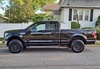
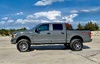
I installed a 2" RC level and found my truck appeared nose high, even though it was dead-nuts level. I guess that's how our trucks look if they're perfectly level because of the lines of the truck. So I ditched the factory 1.25" rear block and put in a 2" and now have the expected 3/4" rake. I'd like just a little more rake, but this will do for now. I'm planning to install the Roadmaster active suspension mod anyway, so that should sit me right where I'd like to be. Tires are 285/60-20 for reference.
I installed a 2" RC level and found my truck appeared nose high, even though it was dead-nuts level. I guess that's how our trucks look if they're perfectly level because of the lines of the truck. So I ditched the factory 1.25" rear block and put in a 2" and now have the expected 3/4" rake. I'd like just a little more rake, but this will do for now. I'm planning to install the Roadmaster active suspension mod anyway, so that should sit me right where I'd like to be. Tires are 285/60-20 for reference.
Those chrome wheels look really good on a paint matched truck.
I put a MotoFab 1.5" level bought from American Trucks for under $70 on my 16 scab with 275/65/18 last Sept. rear measured 37" at middle wheel well and front was 34.5"after I have 37' all around, not worrying about future sag as it is a 16 with OEM setup.
Is the 13th gen suspension vastly different from the 12th? I ran a 2.5" Autospring kit with the 3" rear blocks on my 2014 the whole 6 years and 42K miles I had it with no issues....but I'm seeing a lot of posts that say not to go over 2" for my 2020?
Is the 13th gen suspension vastly different from the 12th? I ran a 2.5" Autospring kit with the 3" rear blocks on my 2014 the whole 6 years and 42K miles I had it with no issues....but I'm seeing a lot of posts that say not to go over 2" for my 2020?
I dunno whether that's cool or not (honestly, 2.5" is ok for most probably), but 42k miles is hardly a longevity test. I want to see if the CV joints are still intact after 175,000 miles. 42k is barely broken in.
So, yes, above 2.5" front lift on an otherwise stock truck will create unfavorable angles to, and stress the front drive CVs... but then there's the issue of suspension geometry at lifts any higher. This is why the 4" and 6" kits provide components to relocate lower control arm pivot points, longer uprights (hubs/spindles), etc...
Why more people don't do a 4" is beyond me. Seems to be just about perfect. I'd do it but I don't want to do all that additional work! and besides, I'm saving up to do a locking rear axle assembly.


![[F2C]MaDMaXX's Avatar](https://www.f150forum.com/customavatars/avatar324923_9.gif)