


Thinking


Super Moderator


Joined: Oct 2016
Posts: 11,122
Likes: 4,356
From: Unknown


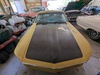
I told his wife when she was ready to move forward, I would buy the car.
I moved it home in Oct. 2023. it had been sitting a long time.




Senior Member
Joined: Oct 2017
Posts: 1,728
Likes: 440
From: CA near Frisco
Hey guys... Does anyone know the approximate parasitic draw of the computer, or the F150, on a battery? I'm sizing a set of dash-sized solar panels to offset it.
(Over a sunny day, if angled decently at noonish, the whole day gives the equivalent of 5 hours at peak output; so those "5 hours" will have to be enough to cover all 24 hours. Call it 25 for easy math.)
(Over a sunny day, if angled decently at noonish, the whole day gives the equivalent of 5 hours at peak output; so those "5 hours" will have to be enough to cover all 24 hours. Call it 25 for easy math.)
Super Moderator
Joined: Oct 2016
Posts: 11,122
Likes: 4,356
From: Unknown
Speaking of Batteries....
Moms Edge messaged her that it was going into deep sleep to conserve battery voltage.
She is leaving for a week in the morning and parking it in my aunt's driveway till I pick it up to detail it.
Looks like I am headed over there to put it on the charger for the night.
Moms Edge messaged her that it was going into deep sleep to conserve battery voltage.
She is leaving for a week in the morning and parking it in my aunt's driveway till I pick it up to detail it.
Looks like I am headed over there to put it on the charger for the night.
Senior Member
Joined: Oct 2017
Posts: 1,728
Likes: 440
From: CA near Frisco
I realized most computers will be similar. Oh, I tend to stay in dark mode on this phone, so my source did not paste very legibly, so I deleted it.
50 - 85 ma is the general answer. THX anyway. So, 25/5=5. 5x100ma = 1000ma =1A. A solar array on a dash needs about a 1A output at something over 12.6 Vdc, in order to handle charging the battery. Ideally, you let a $10-20 controller do it from the panel's ~19 Vdc, (which ideally and commonly has a battery maintenance feature, and with "float.") I used 100 ma to add an 18-100% cushion to the 50-85ma.
50 - 85 ma is the general answer. THX anyway. So, 25/5=5. 5x100ma = 1000ma =1A. A solar array on a dash needs about a 1A output at something over 12.6 Vdc, in order to handle charging the battery. Ideally, you let a $10-20 controller do it from the panel's ~19 Vdc, (which ideally and commonly has a battery maintenance feature, and with "float.") I used 100 ma to add an 18-100% cushion to the 50-85ma.
Hey guys... Does anyone know the approximate parasitic draw of the computer, or the F150, on a battery? I'm sizing a set of dash-sized solar panels to offset it.
(Over a sunny day, if angled decently at noonish, the whole day gives the equivalent of 5 hours at peak output; so those "5 hours" will have to be enough to cover all 24 hours. Call it 25 for easy math.)
(Over a sunny day, if angled decently at noonish, the whole day gives the equivalent of 5 hours at peak output; so those "5 hours" will have to be enough to cover all 24 hours. Call it 25 for easy math.)
Last edited by BillSF9c; Feb 24, 2024 at 08:25 PM.
Senior Member


Joined: Apr 2023
Posts: 4,294
Likes: 1,389
From: Near Salt Lake City
They paid me well to fix a bunch of their trucks

98 F150 5.4L E40D/4R100

Joined: Nov 2006
Posts: 28,519
Likes: 7,630
From: MI
I realized most computers will be similar. Oh, I tend to stay in dark mode on this phone, so my source did not paste very legibly, so I deleted it.
50 - 85 ma is the general answer. THX anyway. So, 25/5=5. 5x100ma = 1000ma =1A. A solar array on a dash needs about a 1A output at something over 12.6 Vdc, in order to handle charging the battery. Ideally, you let a $10-20 controller do it from the panel's ~19 Vdc, (which ideally and commonly has a battery maintenance feature, and with "float.") I used 100 ma to add an 18-100% cushion to the 50-85ma.
50 - 85 ma is the general answer. THX anyway. So, 25/5=5. 5x100ma = 1000ma =1A. A solar array on a dash needs about a 1A output at something over 12.6 Vdc, in order to handle charging the battery. Ideally, you let a $10-20 controller do it from the panel's ~19 Vdc, (which ideally and commonly has a battery maintenance feature, and with "float.") I used 100 ma to add an 18-100% cushion to the 50-85ma.
Huh...I understand you ^^^ better when you talk to yourself..
