


Payload question


Thread Starter
Member
Joined: Feb 2021
Posts: 44
Likes: 13

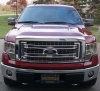
Here are my numbers for my 2021 F150 Lariat PowerBoost. I have the 7.2 KW generator, 7350# GVWR, Standard Tow Package but with the 3 rear leaf springs of the Max Tow Package. My Payload is 1595#. My hitch sticker states with WDH 11,600# / 1160# Tongue. My front GAWR is 3900#, rear GAWR is 4150#. I have the 3.73 Rear. Just showing real numbers as information.

Senior Member


Joined: Dec 2013
Posts: 14,975
Likes: 6,035
From: SE Michigan
The real purpose of weighing at a CAT scale, for a brand new vehicle, is to weigh, with a trailer, and get 3 weights:
1) Truck by itself, fully gassed, and loaded with passengers and stuff.
2) Truck, with trailer, but without bars/chains connected.
3) Truck with trailer setup as the person believes is correct.
This process shows a few things. It shows whether the total load of truck and trailer is too heavy. It shows in #2 the weight on each axle, and in #3 it shows that weight being shifted forward and backward. This allows the person to see if the hitch is properly adjusted, and if not to redo things and then reweigh. A reweigh is generally almost nothing in cost.
Thread Starter
Member
Joined: Feb 2021
Posts: 44
Likes: 13

5 Year Member


Joined: Apr 2020
Posts: 2,355
Likes: 1,184
From: Franklin, PA
Yes, the EMPTY tank. RVs are shipped with empty tanks. Empty tank is part of a trailer dry weight. So the 20# of propane in a 20# rated tank is not in the manufactures dry tongue weight.
Last edited by Boomerweps; Mar 1, 2021 at 01:26 PM.

Junior Member
Joined: May 2021
Posts: 1
Likes: 0
Linked Towing Guide
Sorry this got a bit long.....
Have you ever looked at the weight of an Airstream?
My guess is the truck was driver only, the truck and the camper were also filled with helium balloons.... Heck they even show one pulling it on the cover of their trailering guide. LOL
https://www.fleet.ford.com/content/d...owingGuide.pdf
Yeah I have seen the commercials. It is just the marketing department that must also be the guys that say it can tow 13,200#.
To be fair it isn't just Ford, all the truck companies do this and it is kind of sad. I mean who was it Toyota I think that was towing the Space Shuttle a few years back?
While I know that Payload is going to be one of your important numbers to watch. While not the only one it is the first one I look at as it is the easiest to see in a door jam and the quickest one you will see where you are at if you run the numbers on paper quickly with a calculator. However it is hard to really figure. Like in your example of ordering a Lariat with Hybrid being 1600. Maybe but I doubt it. There was a year or two where Lariat could get the HDPP but as far as I know it is XLT only for the last few years unless that changed with the new 2021, I haven't looked. The thing is that even between Lariats of the same model year the payload can differ from truck to truck sometimes quite a bit as there are so many things that go into the number.
Then I saw in the news just this week that Ford is recalling a bunch of F250s because a sticker wasn't properly addressing a number and people may inadvertently overload the truck. How much do you want to bet they are reprinting the payload stickers? Also keep in mind that anything added to the truck after it left the factory goes against payload. So don't forget about dealer installed options like maybe a bed cover.
This might help you understand the relationship between all of this. If you go back to that link above with the trailering guide. Scroll down to page 20. It shows the combined weight ratings (GCWR) on the left next to the engine options and axle ratio. These numbers don't take into account options so not comparing say a XLT to a Limited. So to do a bit of comparison trying to keep it apples to apples. Compare the 3.5EB to the 3.5Hybid. If looking at 4x4 you have to use the 3.73 ratio. The GCWR is close to 1000# more on the non hybrid. Granted this isn't a perfect comparison because the 3.5EB has the note #3 which is HDPP. To try and compare without HDPP you can't with 4WD as you would have to step down to 3.55 but it doesn't look like you can get that in a hybrid. However, comparing 2wd/max tow both without HDPP it still is 1000# difference on GCWR and 1300# in claimed towing capability. That is really interesting and partly what is going on. You have to keep in mind the engine is basically the same. While you can get a non-hybrid with the bigger fuel tank the hybrid has the electric motor between the transmission and engine plus batteries and other electronic bits to make it work. That might add close to 1000# of weight and explain it.
So if you are limited to 18,400 GCWR every option you add to the truck erodes this number. It is a give and take, when you get up into the Limited and Platinum trims the curb weight has crept up so much that there simply isn't much left in payload. That is how payload is calculated. You take the GCWR, subtract the weight of the truck with a full tank of gas and the left over is payload.
Now to throw something else into the mix. One thing I haven't seen a good answer on is what does SAE J2807 method mean. If you go back to that trailering guide on pg 20 or any of the others with the chart there is a note that they used the SAE J2807 method to calculate these figures. I have dug into this a bit and the intent is to come up with a standardized method for measuring towing guides between the brands so as a consumer you can better compare. I have seen this mentioned in Ford's towing guides going back to at least model year 2015 but it has been around longer than that. I haven't dug back into back issues of the trailering guide to see where it first popped up though. J2807 is a big long engineering type document that is sure to put you to sleep but the interesting thing is that they specify one thing in particular that might come into play. It states that when they do the testing that they are accounting for 150# Driver, 150# Passenger and a hitch (WD) that weighs 70#. So if the payload capacity sticker was also generated with SAE J2807 in mind as well, that could in theory mean you have a credit of 370# on the table that you can add to the payload number. That is substantial when you are talking tight payload numbers on highly trimmed trucks. Personally I don't account for it because I haven't seen cut and dry evidence on how it applies to payload numbers. The engineering document seriously put me to sleep a few times and it mainly talks about towing test detailed down to a specific section of road in AZ if I remember correctly. For me it is just a possible margin of safety that is likely there. I have spoken to a buddy that is a mechanical engineer and he laughs at me when I complain about payload numbers as he said there is a huge safety margin built into them as we sit around the campfire drinking another beer.
I only bring up SAE J2807 as it is something you can do your homework on to see if it is something you want to account for. Some people here will bring it up, it is a thing, others mostly ignore it and do the numbers the old way like I do. I will say that these trucks all have all kinds of power and it isn't a problem there. Also there are lots of people out there on the roads that completely ignore that payload number. It is you and your family in the vehicle. We can talk about this stuff till we are blue in the face or our fingers covered in blisters, people will still say they upgraded their brakes, added air bags or added one of those hula dancing girls on their dash so they can now tow it even if the stickers and guide say they can't.
Have you ever looked at the weight of an Airstream?
My guess is the truck was driver only, the truck and the camper were also filled with helium balloons.... Heck they even show one pulling it on the cover of their trailering guide. LOL
https://www.fleet.ford.com/content/d...owingGuide.pdf
Yeah I have seen the commercials. It is just the marketing department that must also be the guys that say it can tow 13,200#.
To be fair it isn't just Ford, all the truck companies do this and it is kind of sad. I mean who was it Toyota I think that was towing the Space Shuttle a few years back?
While I know that Payload is going to be one of your important numbers to watch. While not the only one it is the first one I look at as it is the easiest to see in a door jam and the quickest one you will see where you are at if you run the numbers on paper quickly with a calculator. However it is hard to really figure. Like in your example of ordering a Lariat with Hybrid being 1600. Maybe but I doubt it. There was a year or two where Lariat could get the HDPP but as far as I know it is XLT only for the last few years unless that changed with the new 2021, I haven't looked. The thing is that even between Lariats of the same model year the payload can differ from truck to truck sometimes quite a bit as there are so many things that go into the number.
Then I saw in the news just this week that Ford is recalling a bunch of F250s because a sticker wasn't properly addressing a number and people may inadvertently overload the truck. How much do you want to bet they are reprinting the payload stickers? Also keep in mind that anything added to the truck after it left the factory goes against payload. So don't forget about dealer installed options like maybe a bed cover.
This might help you understand the relationship between all of this. If you go back to that link above with the trailering guide. Scroll down to page 20. It shows the combined weight ratings (GCWR) on the left next to the engine options and axle ratio. These numbers don't take into account options so not comparing say a XLT to a Limited. So to do a bit of comparison trying to keep it apples to apples. Compare the 3.5EB to the 3.5Hybid. If looking at 4x4 you have to use the 3.73 ratio. The GCWR is close to 1000# more on the non hybrid. Granted this isn't a perfect comparison because the 3.5EB has the note #3 which is HDPP. To try and compare without HDPP you can't with 4WD as you would have to step down to 3.55 but it doesn't look like you can get that in a hybrid. However, comparing 2wd/max tow both without HDPP it still is 1000# difference on GCWR and 1300# in claimed towing capability. That is really interesting and partly what is going on. You have to keep in mind the engine is basically the same. While you can get a non-hybrid with the bigger fuel tank the hybrid has the electric motor between the transmission and engine plus batteries and other electronic bits to make it work. That might add close to 1000# of weight and explain it.
So if you are limited to 18,400 GCWR every option you add to the truck erodes this number. It is a give and take, when you get up into the Limited and Platinum trims the curb weight has crept up so much that there simply isn't much left in payload. That is how payload is calculated. You take the GCWR, subtract the weight of the truck with a full tank of gas and the left over is payload.
Now to throw something else into the mix. One thing I haven't seen a good answer on is what does SAE J2807 method mean. If you go back to that trailering guide on pg 20 or any of the others with the chart there is a note that they used the SAE J2807 method to calculate these figures. I have dug into this a bit and the intent is to come up with a standardized method for measuring towing guides between the brands so as a consumer you can better compare. I have seen this mentioned in Ford's towing guides going back to at least model year 2015 but it has been around longer than that. I haven't dug back into back issues of the trailering guide to see where it first popped up though. J2807 is a big long engineering type document that is sure to put you to sleep but the interesting thing is that they specify one thing in particular that might come into play. It states that when they do the testing that they are accounting for 150# Driver, 150# Passenger and a hitch (WD) that weighs 70#. So if the payload capacity sticker was also generated with SAE J2807 in mind as well, that could in theory mean you have a credit of 370# on the table that you can add to the payload number. That is substantial when you are talking tight payload numbers on highly trimmed trucks. Personally I don't account for it because I haven't seen cut and dry evidence on how it applies to payload numbers. The engineering document seriously put me to sleep a few times and it mainly talks about towing test detailed down to a specific section of road in AZ if I remember correctly. For me it is just a possible margin of safety that is likely there. I have spoken to a buddy that is a mechanical engineer and he laughs at me when I complain about payload numbers as he said there is a huge safety margin built into them as we sit around the campfire drinking another beer.
I only bring up SAE J2807 as it is something you can do your homework on to see if it is something you want to account for. Some people here will bring it up, it is a thing, others mostly ignore it and do the numbers the old way like I do. I will say that these trucks all have all kinds of power and it isn't a problem there. Also there are lots of people out there on the roads that completely ignore that payload number. It is you and your family in the vehicle. We can talk about this stuff till we are blue in the face or our fingers covered in blisters, people will still say they upgraded their brakes, added air bags or added one of those hula dancing girls on their dash so they can now tow it even if the stickers and guide say they can't.
This morning though I looked back at the towing guide I have (which you have linked), and if you look at the bottom of the third page in smaller italic print it states "Maximum towing capabilities are for property equipped vehicles with required equipment and a 150-lb driver and passenger and vary based on cargo..." While I do not see anywhere that explicitly states they do follow J2807, to me this statement indicates what I believe you though, that you would essentially have a 300lb credit in your payload. I would agree however that you probably shouldn't be trying to push it that much, and in my case, it would more just give me peace of mind.
Thanks for your post, it at least got me to look at this a little more and learn some about J2807.

Senior Member

Joined: Jun 2019
Posts: 643
Likes: 201
From: Twin Cities, MN
I am a little late to the post but happen to be looking for a truck and have landed on the F-150. We plan to be towing and early on I realized that the payload is probably where you will run into trouble. Anyways, I found one I like and got all the ratings for that specific vehicle. The payload per the factory guide is 2100lbs, although when you factor in the upgrades etc, this specific vehicle dropped to around 1750. With the trailer we are looking at, I do think I would be alright, however it would mean I wouldn't really be able to use the bed for much at all while towing. That is when I stumbled onto this post as I was trying to see if people were included in the payload and your comment mentioning SAE J2807 caught my attention. Well it was a rabbit hole last night trying to find the answer, but it seemed to me that it would make sense that a couple people, and at least one would at least be included in the equation since there has to be someone driving.
This morning though I looked back at the towing guide I have (which you have linked), and if you look at the bottom of the third page in smaller italic print it states "Maximum towing capabilities are for property equipped vehicles with required equipment and a 150-lb driver and passenger and vary based on cargo..." While I do not see anywhere that explicitly states they do follow J2807, to me this statement indicates what I believe you though, that you would essentially have a 300lb credit in your payload. I would agree however that you probably shouldn't be trying to push it that much, and in my case, it would more just give me peace of mind.
Thanks for your post, it at least got me to look at this a little more and learn some about J2807.
This morning though I looked back at the towing guide I have (which you have linked), and if you look at the bottom of the third page in smaller italic print it states "Maximum towing capabilities are for property equipped vehicles with required equipment and a 150-lb driver and passenger and vary based on cargo..." While I do not see anywhere that explicitly states they do follow J2807, to me this statement indicates what I believe you though, that you would essentially have a 300lb credit in your payload. I would agree however that you probably shouldn't be trying to push it that much, and in my case, it would more just give me peace of mind.
Thanks for your post, it at least got me to look at this a little more and learn some about J2807.
Referencing back to that guide that I linked to before for the 2021. If you look at page 2 at the bottom there is a section for SAE Towing. In that it does reference that they use SAE J2807. The last sentence in that blurb specifically says Ford follows that standard to all vehicles. This isn't something new and I want to say I have seen this going back to model year 2015 at least.
Now flip to page 43 and look at what it says about the GVW and GVWR. The GVW is just curb weight + cargo (which would also be hitch weight) + people) and you don't want to exceed the GVWR. So if you look at your stickers and find that number you can run the numbers.
My GVWR is 7050#.
My payload is 1568# which is the people and cargo part of the number.
My curb weight was 5482# when it left the factory when factoring in a full tank of fuel. It is a bit higher than that now because of some modifications but as that curb weight goes up, the payload goes down because the total number should never exceed the GVWR.
Now I don't see that curb weight on a sticker. It is just found by subtracting payload from GVWR. Really the curb doesn't matter which is why they probably don't bother to list it. The only real way to find your curb weight and therefore your true payload is a trip to the CAT Scale. Weigh the truck and subtract your weight if you would rather add it on the payload said where it belongs. If you do a trip like that to a CAT Scale, also look at those axle ratings as long as you are at it. In that case my Front GARW is 3650# and Rear GAWR is 4050#. Playing around with your WD hitch settings will dial that number in spec.
So what does all this mean in terms of J2807? I don't know. As mentioned it is a big rabbit hole. I don't see any evidence it was used to come to the payload number. I don't have the manual for the 2021 handy but looking at my manual for the 2018, it is likely similar. Look in the towing section. For my truck it states. Crew Cab 4WD 157" WB 3.5 GTDI with 3.55 axle ratio and Max Duty Trailer Tow Package that my GCWR (or Gross Combined Weight Rating) using SAE J2807 method is 18,400#. So that is the combined weight of the trailer and truck combination. That is the only measurement where I have actually seen the reference to J2807.
It then goes on to state a section for Calculating the Maximum Loaded Trailer Weight for Your Vehicle.
1. Start with the GCWR from above so in my case 18,400
2. Subtract all of the following that apply to your vehicle.
- Vehicle Curb Weight
- Hitch Hardware Weight (the roughly 100# for the WD hitch)
- Driver weight
- Passenger(s) weight
- Payload, cargo and luggage weight
- Aftermarket (dealer installed or otherwise) equipment weight
So for some of this you really need to go to a CAT scale. It is just easier this way to pull onto the scale. It will break down your numbers by steer axle, truck rear axle and trailer axles as well as total weight. Weight it with and without the trailer. If you have a WD hitch where you can easily adjust the load on the spring bars you might want to do additional rewieghs with different settings. Look at the total weight, if in my case less than 18,400# and I am good on the axle ratings to include shifting weight back on the steer axle. Also weigh with just the truck and people. If I am below the 7050# for my truck, then I am good all the way around. If not well then you are over. If I am over by say 50# I probably won't sweat it too much. If I am over by 500# well.... Lets hope I am under by 50# when I hit the CAT Scales this weekend. I know I am tight. Worst case, if I am 500# over which I know I am not, then I swap trucks with my Father in Law and take his GMC 3500 Dually for our trip out west. I could just about put the camper in the bed of that truck and still be good. Not that it would fit but you get what I am saying. Complete overkill for a 6500# or so camper. The biggest question I have is how much weight we shed from the camper. The last time I did a CAT Scale with the previous truck it was in the 6500 range from my calculations.