


mpg help


Senior Member
Joined: Nov 2009
Posts: 1,213
Likes: 36
From: Cleveland, OH

Say $600, gives you 2 mpg better. You will save about $5-8 per tank depending. That means you have 75-120 tanks to break even, and that is only if you see that improvement over each tank. If you have a bad tank it doesn't count or could set you back. Say that 2mpg takes you from 14 to 16. For my 30 gal tank, that would be 480 miles. Over 75 tanks that is 36,000 miles and over 120 tanks that is 57,600 miles.
That is just to break even.
Senior Member
Joined: Nov 2009
Posts: 1,213
Likes: 36
From: Cleveland, OH
I took a friends advice and tried ethanol free gas for a while (10 fill-ups). I was averaging probably around 14 mpg. I just decided to go switch stations (10% ethanol) and on the first fill-up I got 15.6 mpg. Not great, but an improvement.
I've been running a K&N filter since early on.
I've been running a K&N filter since early on.
Senior Member
Joined: Nov 2009
Posts: 1,213
Likes: 36
From: Cleveland, OH
Thats what I was thinking and getting a diagnostics run to see if I have a bad sensor. I normaly do not drive the truck, My wife does and she drives normal not doing burn-outs or any dumb crap. I drove it the other day and it seems to run rough. I cant really tell if its underpowered any, I drive a diesel so any gas engine to me is underpowered however one of my friends driver a F-150 and he says my wife truck feels underpowered to him.
If it seems rough, it probably is. If it feels underpowred to your friend, it just might be.
Things are looking up!
Joined: May 2009
Posts: 193
Likes: 0
From: Richmond, VA
I doubt it is. How much does it cost? If you spend a $1000 on it... then you better be seeing an MPG improvement of 4-5+ or more, or you might never earn that money spent over time. I am not home right now but I did some basic analysis and modding for mpg improvement is pretty much a no win situation.
Say $600, gives you 2 mpg better. You will save about $5-8 per tank depending. That means you have 75-120 tanks to break even, and that is only if you see that improvement over each tank. If you have a bad tank it doesn't count or could set you back. Say that 2mpg takes you from 14 to 16. For my 30 gal tank, that would be 480 miles. Over 75 tanks that is 36,000 miles and over 120 tanks that is 57,600 miles.
That is just to break even.
Say $600, gives you 2 mpg better. You will save about $5-8 per tank depending. That means you have 75-120 tanks to break even, and that is only if you see that improvement over each tank. If you have a bad tank it doesn't count or could set you back. Say that 2mpg takes you from 14 to 16. For my 30 gal tank, that would be 480 miles. Over 75 tanks that is 36,000 miles and over 120 tanks that is 57,600 miles.
That is just to break even.
Justin
Joined: Apr 2008
Posts: 2,758
Likes: 8
From: Denver, CO
Could depend on your trucks setup too, when your friend refers to it being underpowered. You have the 4.6L, but what gears, 3.55? If your friends truck has say the 5.4L and 3.73 gears, then of course he'll say yours feels underpowered. Just thought I'd throw that out.
Senior Member
Joined: Dec 2007
Posts: 444
Likes: 0
From: Eastern Massachusetts

Senior Member
Joined: Nov 2009
Posts: 1,213
Likes: 36
From: Cleveland, OH
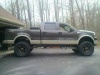
You are just factoring in the mpg's. I know that alone wont make up for the cost of the regearing. But factor in the 37" tires and how that changes you rpm range when driving, it puts alot of stress on the transmission and engine itself. What do you think caused the worse mpg's with the bigger tires?...You practically lose all your power and have to mat it just to get those tires moving and get out of your own way. Now factor in having to replace trans. or engine prematurely and then tell me if it may be worth it in the long run.


Junior Member
Joined: Jan 2010
Posts: 2
Likes: 0
From: Bloomfield Hills, MI
mpg help
This is a no BS zone.
As long as you have been maintaining your truck properly, your mileage is likely a reflection of the vehicle as spec'd, your driving habits and routes taken. It's expensive to replace axles, wheels and tires to chase a few mpg. It's easier to observe a few menial things like the timing of the traffic lights and to give a little extra space between you and vehicle in front to avoid touching brakes. You never get back the gas used to get yourself to speed. I try to maintain speeds above 45 even if it means "expanding slightly" the posted speed to mean "suggested" rather than limit. In residential, school zones and business areas I strictly observe the speed limit.
I worked at Ford light truck engineering until the mid-80s and have had Ford products since. My current truck is an F150 XLT supercrew 5.4L with 3.55 LS, trailer tow and a soft bed cover.
I regularly drive round trip from the northern suburbs of Detroit to Akron with the cruise set at 70 (this is 68 actual per my GPS). I fill up at start and end so I have a very accurate reading of economy. Summertime it is 20±.5 mpg. In the winter it is about 1 mpg less. Head & tailwinds have a major effect. A roundtrip to VA yielded 19.5 including the Appalachians. Around town is a mixed bag other than no stop and go. I average between 14 and 16 mpg. I haul my brass era Model T to tours and meets in an enclosed trailer and never use OD and never go over 65. That yields 12-14 mpg depending on circumstance. All fuel purchases are fill-ups and are documented with the miles driven going back to when the truck was new. I do not vary the brand of gas much. At home I am a mile from a Costco and can't pass up the discounted gas. On the road I often buy FlyingJ. Neither has shown to be adverse.
The engine, axle, 2WD, truxedo bed cover and tires were selected to accommodate the scenarios described above. The dealer tried like crazy to get me to take a 4x4 and the standard 3.73 axle. My resistance has paid mpg dividends for 5 years.
By the way, the Model T gets about 20 mpg, too.
As long as you have been maintaining your truck properly, your mileage is likely a reflection of the vehicle as spec'd, your driving habits and routes taken. It's expensive to replace axles, wheels and tires to chase a few mpg. It's easier to observe a few menial things like the timing of the traffic lights and to give a little extra space between you and vehicle in front to avoid touching brakes. You never get back the gas used to get yourself to speed. I try to maintain speeds above 45 even if it means "expanding slightly" the posted speed to mean "suggested" rather than limit. In residential, school zones and business areas I strictly observe the speed limit.
I worked at Ford light truck engineering until the mid-80s and have had Ford products since. My current truck is an F150 XLT supercrew 5.4L with 3.55 LS, trailer tow and a soft bed cover.
I regularly drive round trip from the northern suburbs of Detroit to Akron with the cruise set at 70 (this is 68 actual per my GPS). I fill up at start and end so I have a very accurate reading of economy. Summertime it is 20±.5 mpg. In the winter it is about 1 mpg less. Head & tailwinds have a major effect. A roundtrip to VA yielded 19.5 including the Appalachians. Around town is a mixed bag other than no stop and go. I average between 14 and 16 mpg. I haul my brass era Model T to tours and meets in an enclosed trailer and never use OD and never go over 65. That yields 12-14 mpg depending on circumstance. All fuel purchases are fill-ups and are documented with the miles driven going back to when the truck was new. I do not vary the brand of gas much. At home I am a mile from a Costco and can't pass up the discounted gas. On the road I often buy FlyingJ. Neither has shown to be adverse.
The engine, axle, 2WD, truxedo bed cover and tires were selected to accommodate the scenarios described above. The dealer tried like crazy to get me to take a 4x4 and the standard 3.73 axle. My resistance has paid mpg dividends for 5 years.
By the way, the Model T gets about 20 mpg, too.

Senior Member
Joined: Nov 2009
Posts: 1,213
Likes: 36
From: Cleveland, OH