


Tire plug vs patch


Thread Starter
Senior Member
Joined: Mar 2010
Posts: 752
Likes: 26
From: United States of America

I caught a nail in my tire this morning on my way Home from my second job. So I took it to the place where I got my tires because I paid for the road hazard warranty. It's still held Air in the tire so they were going to take care of it at no cost to me.
I got it back a few minutes ago and I saw this sticking out of the hole.
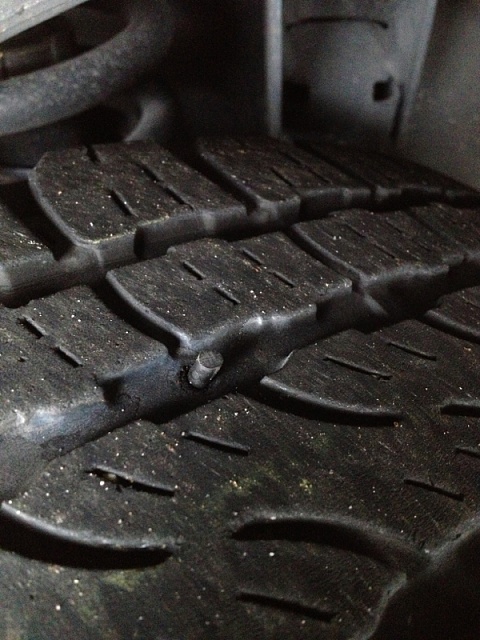
I don't know much about this kind of stuff but I think there's a difference between a patch and a plug. I asked specifically for a patch because I think that's where they have to take the tire off the rim and fix it from the inside. But this picture makes me think that that's not what happened. can you guys tell just by looking at it or is this just a normal part of the patch process?
I tried to call up there to ask but they're not answering at the moment. it was really busy today. they had it for close to three hours. Plus I trust this forum more than those guys
I got it back a few minutes ago and I saw this sticking out of the hole.

I don't know much about this kind of stuff but I think there's a difference between a patch and a plug. I asked specifically for a patch because I think that's where they have to take the tire off the rim and fix it from the inside. But this picture makes me think that that's not what happened. can you guys tell just by looking at it or is this just a normal part of the patch process?
I tried to call up there to ask but they're not answering at the moment. it was really busy today. they had it for close to three hours. Plus I trust this forum more than those guys
Last edited by JoePal; Mar 24, 2013 at 01:56 PM.

I Like Tires
Joined: Aug 2010
Posts: 4,828
Likes: 250
From: Texas
I can tell by looking at it and from what you explained that you took it to Discount Tire.
We use a plug AND patch system as this is reccomended guidelines for tire repair by the Rubber Manufacturers Association.
We drill out a hole just smaller than the plug, and these plugs aren't like those orange sticky temporary plugs. These plugs are made of a similar rubber compound than your tire, and will wear along with your tire.
We then glue the plug in the hole and it's already a tight fit. We clip off any excess and lightly buff the inside of the tire around and on the plug smooth.
Lay down some quick dry cement place down a patch over the plug, roll out all the air to ensure good contact with the glue. And then place a Repair Sealer (Tar) Over the patch as well.
The patch ensures the hole will no longer allow air to escape and the plug keeps water from getting under the patch which will cause any patch without a plug to fail.
It's a pretty fail proof system. Hope that helps and alleviates any worries!
We use a plug AND patch system as this is reccomended guidelines for tire repair by the Rubber Manufacturers Association.
We drill out a hole just smaller than the plug, and these plugs aren't like those orange sticky temporary plugs. These plugs are made of a similar rubber compound than your tire, and will wear along with your tire.
We then glue the plug in the hole and it's already a tight fit. We clip off any excess and lightly buff the inside of the tire around and on the plug smooth.
Lay down some quick dry cement place down a patch over the plug, roll out all the air to ensure good contact with the glue. And then place a Repair Sealer (Tar) Over the patch as well.
The patch ensures the hole will no longer allow air to escape and the plug keeps water from getting under the patch which will cause any patch without a plug to fail.
It's a pretty fail proof system. Hope that helps and alleviates any worries!
Last edited by BassAckwards; Mar 24, 2013 at 02:03 PM.

Senior Member
Joined: Oct 2012
Posts: 516
Likes: 38
From: Canada
The system BassAckwards stated sounds good, but I'm under the impression that a repair using only a plug went out when radial tires came on the market. Had your puncture been on the sidewall, neither type of repair would be acceptable IMHO.
Green Gem
Green Gem
I Like Tires
Joined: Aug 2010
Posts: 4,828
Likes: 250
From: Texas
Those orange sticky temporary plugs are just that temporary. Only meant to get you to a shop who can properly repair it. If you keep stuffing more temporary plugs, making the hole bigger, into the tire, it will also become unrepairable. Can only fix a hole about 1/4 inch in diameter, the plug has to have a right fit.


Member
Joined: Feb 2013
Posts: 26,680
Likes: 6,253
From: Big Easy
I keep a plug set and air compressor in my vehicles just incase. That repair could be what I use to use when I worked at Goodyear, it's a combination plug and patch, we had a special gun like tool that would install them but the tire had to be dismounted because you do it from the inside.
Trending Topics
Thread Starter
Senior Member
Joined: Mar 2010
Posts: 752
Likes: 26
From: United States of America
I can tell by looking at it and from what you explained that you took it to Discount Tire.
We use a plug AND patch system as this is reccomended guidelines for tire repair by the Rubber Manufacturers Association.
We drill out a hole just smaller than the plug, and these plugs aren't like those orange sticky temporary plugs. These plugs are made of a similar rubber compound than your tire, and will wear along with your tire.
We then glue the plug in the hole and it's already a tight fit. We clip off any excess and lightly buff the inside of the tire around and on the plug smooth.
Lay down some quick dry cement place down a patch over the plug, roll out all the air to ensure good contact with the glue. And then place a Repair Sealer (Tar) Over the patch as well.
The patch ensures the hole will no longer allow air to escape and the plug keeps water from getting under the patch which will cause any patch without a plug to fail.
It's a pretty fail proof system. Hope that helps and alleviates any worries!
We use a plug AND patch system as this is reccomended guidelines for tire repair by the Rubber Manufacturers Association.
We drill out a hole just smaller than the plug, and these plugs aren't like those orange sticky temporary plugs. These plugs are made of a similar rubber compound than your tire, and will wear along with your tire.
We then glue the plug in the hole and it's already a tight fit. We clip off any excess and lightly buff the inside of the tire around and on the plug smooth.
Lay down some quick dry cement place down a patch over the plug, roll out all the air to ensure good contact with the glue. And then place a Repair Sealer (Tar) Over the patch as well.
The patch ensures the hole will no longer allow air to escape and the plug keeps water from getting under the patch which will cause any patch without a plug to fail.
It's a pretty fail proof system. Hope that helps and alleviates any worries!
Last edited by JoePal; Mar 24, 2013 at 07:11 PM.

Senior Member
Joined: Oct 2012
Posts: 258
Likes: 21
From: Maryland
Old dog
I had no idea they did both the plug and the patch. A plug is nothing more than a temporary repair to get you to to repair place. Thanks for sharing the procedure.
I Like Tires
Joined: Aug 2010
Posts: 4,828
Likes: 250
From: Texas
Average flat repair for my company is about a 15-20 minute job. Assuming the flat is easily visible and you don't have to dunk it and all that crap.