


distributor cap?


Senior Member
Joined: Jun 2011
Posts: 2,364
Likes: 102

I'm not saying seafoam is the "be all, do all, end all" method, I just fail to see how any of your arguments about not using it are valid points. I'd much rather put a "100% petroleum product" (yes I quoted that, because that's what the company Seafoam says) into my intake using the process they outline, over using water in the intake. Please correct me if I'm wrong about where you're putting/using the water. I've never used that method so I don't know anything about it.

Senior Member
Joined: Jul 2011
Posts: 628
Likes: 0
From: USA
Yes but you should realize how competitive marketing strategies work and how they can say just about whatever they want to sell their product. Using marketing as the sole basis of your argument is a bit biased, don't you think? I mean they obviously didn't do a very good job at it either as they did not specify their product as "02 sensor safe" on the can, no where to be found, hmm. Did they ran out of room? Not everyone reads the directions on the can to begin with, much less read them off of seafoam's website.
Water is introduced into the intake manifold in the same way seafoam is.
I posted the directions off their website to educate people that the method of pouring into the intake is not written on the can as far as i'm aware of.
Water is introduced into the intake manifold in the same way seafoam is.
I posted the directions off their website to educate people that the method of pouring into the intake is not written on the can as far as i'm aware of.
Last edited by bluecar5556; Sep 30, 2011 at 07:14 AM.
Senior Member
Joined: Jun 2011
Posts: 2,364
Likes: 102
Originally Posted by bluecar5556
Yes but you should realize how competitive marketing strategies work and how they can say just about whatever they want to sell their product. Using marketing as the sole basis of your argument is a bit biased, don't you think? I mean they obviously didn't do a very good job at it either as they did not specify their product as "02 sensor safe" on the can, no where to be found, hmm. Did they ran out of room? Not everyone reads the directions on the can to begin with, much less read them off of seafoam's website.
Water is introduced into the intake manifold in the same way seafoam is.
I posted the directions off their website to educate people that the method of pouring into the intake is not written on the can as far as i'm aware of.
Water is introduced into the intake manifold in the same way seafoam is.
I posted the directions off their website to educate people that the method of pouring into the intake is not written on the can as far as i'm aware of.
1) Don't use it because you don't trust it and are to lazy and/or stupid to either
2) Get online and research it yourself or
3) Call Seafoam and ask any questions you have.
The people that don't read the instructions on the can, or research on their own, a product they've never used/don't understand .... and use it anyway... probably shouldn't be doing anything mechanical in the first place. Maybe they didn't have room on the can, it is a pretty small can for all that information.
Senior Member
Joined: Jul 2011
Posts: 628
Likes: 0
From: USA
I just fail to see how any of your arguments about not using it are valid points. I'd much rather put a "100% petroleum product" (yes I quoted that, because that's what the company Seafoam says) into my intake using the process they outline, over using water in the intake.
Senior Member
Joined: Jun 2011
Posts: 2,364
Likes: 102
Originally Posted by bluecar5556
My biggest concern is the concentration of the "100% petroleum product" introduced into the combustion chamber. Let's say I have a brand new O2 sensor and someone seafoams their intake, white smoke is bellowing out, and I hold the sensor inside the tip of the exhaust the entire time. Are we going to wager that when the sensor is pulled back out, there will not be any residue left behind that could linger and adversely contaminate "foul" the O2 sensor, making it "switch" less frequently "lazy?"
Senior Member
Joined: Jul 2011
Posts: 628
Likes: 0
From: USA
How would someone prove the part(s) were damaged by seafoam?
Could someone prove they used their products properly, instead of 3 cans in secession?
The point, without competitive marketing attempting to create a product more appealing than their competitors, is oxygen sensors are easily contaminated by foreign matter regardless if it's 100% petroleum based. They still get fouled out from engines running too rich, too.
It's hard to imagine water vapor in a 2800°F combustion chamber contaminating the sensor similar to the thick white plumbs seafoam creates, but that's my opinion.
Last edited by bluecar5556; Sep 30, 2011 at 08:35 AM.
Senior Member
Joined: Jun 2011
Posts: 2,364
Likes: 102
Originally Posted by bluecar5556
A lawsuit to compensate for what losses?
How would someone prove the part(s) were damaged by seafoam?
Could someone prove they used their products properly, instead of 3 cans in secession?
The point, without competitive marketing attempting to create a product more appealing than their competitors, is oxygen sensors are easily contaminated by foreign matter regardless if it's 100% petroleum based. They still get fouled out from engines running too rich, too.
It's hard to imagine water vapor in a 2800°F combustion chamber contaminating the sensor similar to the thick white plumbs seafoam creates, but that's my opinion.
How would someone prove the part(s) were damaged by seafoam?
Could someone prove they used their products properly, instead of 3 cans in secession?
The point, without competitive marketing attempting to create a product more appealing than their competitors, is oxygen sensors are easily contaminated by foreign matter regardless if it's 100% petroleum based. They still get fouled out from engines running too rich, too.
It's hard to imagine water vapor in a 2800°F combustion chamber contaminating the sensor similar to the thick white plumbs seafoam creates, but that's my opinion.
Proof wouldn't be that hard. Make a video that shows you putting a new sensor in or proving that it had no problems before the use of Seafoam. Using the Seafoam as per their instructions showing proof that you are indeed following their given instructions.
Then show that the sensor has been fouled or damaged in some way after you used Seafoam in your system.
Seafoam didn't make any "thick white plumbs" when I used it. Nor does it with everyone that uses it. So because they're trying to sell their product you obviously can't believe anything they say about it. Lord forbid someone tries to sell their product. Guess we shouldn't buy or use anything that someone is trying to sell.
Seafoam even says (on their site) that putting the Seafoam in the intake is for quicker results, but advises that you just use it in your fuel tank(s) since it produces the same results. The only difference is how quickly the product works.
The main worry of using Seafoam, or even water, in the intake is the possibility of hydrolock. Which they talk about on their site. They give warnings and advice on the various uses of their product even going so far as to say that if you don't know what your doing get a professional mechanic to do it for you.

I used Seafoam for the first time not long ago, and as I do when using something I'm unfamiliar with I read the instructions on the can. It clearly states on the can the correct way to introduce it into the engine. Also, I did not get the thick smoke plumes.

Old Bastard
Joined: Oct 2009
Posts: 587
Likes: 2
From: Macomb, IL
I became "aware" of SeaFoam in 2003 when I restored an old (1979) Goldwing. I used it in the gas and it did a wonderful job of solving a mid RPM problem I was having with my carbs.
In 2003 most people, including the auto parts store, didn't know what SeaFoam was because only Marine Mechanics used it on 2 cycle boat motors.
I like the product as a gas treatment. I don't know if it works as a Oil treatment or to remove combustion deposits on the valves or pistons but I have tried it. I choose not to use it except as a fuel treatment, once a year, because of it's cost.
When it was introduced to my intake, I had great white plumes of smoke. The same as using transmission fluid in the same capacity.
Here is what I know...water works very well and is inexpensive. Only a moron could manage to hydrolock his engine with the small amounts you use. In the old days you'd pour water into the carb while reving the engine until the engine started to stall and then pump the gas to keep the engine going. I used to use about 1 quart of water. I have never hydrolocked an engine.
The O2 argument aside, anytime you introduce something foreign into a combustion chamber you run a high risk of ruining a Catalytic Converter. For example, Oil leaking past your rings will clog your cat.
Water is water. It is in the air you and your engine breaths. Too much can be a very bad thing for you and your engine if you get too much, too fast. Used properly, water turns into steam, cleans what it needs to and goes out your exhaust. Water Vapor will not harm a cat.
Learn about Water Injection here: http://en.wikipedia.org/wiki/Water_injection_(engines)
Right now, water/methanol injection is very popular with the racers, especially those running high boost.
As to lawsuits for product claims that aren't true.....Amsoil would be a good example, as would all those infomercials you see on TV. They are rare to non existent.
As for the O2 sensor argument:
What will damage my O2 sensor?
Home or professional auto repairs that have used silicone gasket sealer that is not specifically labeled "Oxygen sensor safe", "Sensor safe", or something similar, if used in an area that is connected to the crankcase. This includes valve covers, oil pan, or nearly any other gasket or seal that controls engine oil. Leaded fuel will ruin the O2 sensor in a short time. If a car is running rich over a long period, the sensor may become plugged up or even destroyed. Just shorting out the sensor output wire will not usually hurt the sensor. This simply grounds the output voltage to zero. Once the wiring is repaired, the circuit operates normally. Undercoating, antifreeze or oil on the *outside* surface of the sensor can kill it.
From: http://mr2.com/TEXT/O2_Sensor.html
In 2003 most people, including the auto parts store, didn't know what SeaFoam was because only Marine Mechanics used it on 2 cycle boat motors.
I like the product as a gas treatment. I don't know if it works as a Oil treatment or to remove combustion deposits on the valves or pistons but I have tried it. I choose not to use it except as a fuel treatment, once a year, because of it's cost.
When it was introduced to my intake, I had great white plumes of smoke. The same as using transmission fluid in the same capacity.
Here is what I know...water works very well and is inexpensive. Only a moron could manage to hydrolock his engine with the small amounts you use. In the old days you'd pour water into the carb while reving the engine until the engine started to stall and then pump the gas to keep the engine going. I used to use about 1 quart of water. I have never hydrolocked an engine.
The O2 argument aside, anytime you introduce something foreign into a combustion chamber you run a high risk of ruining a Catalytic Converter. For example, Oil leaking past your rings will clog your cat.
Water is water. It is in the air you and your engine breaths. Too much can be a very bad thing for you and your engine if you get too much, too fast. Used properly, water turns into steam, cleans what it needs to and goes out your exhaust. Water Vapor will not harm a cat.
Learn about Water Injection here: http://en.wikipedia.org/wiki/Water_injection_(engines)
Right now, water/methanol injection is very popular with the racers, especially those running high boost.
As to lawsuits for product claims that aren't true.....Amsoil would be a good example, as would all those infomercials you see on TV. They are rare to non existent.
As for the O2 sensor argument:
What will damage my O2 sensor?
Home or professional auto repairs that have used silicone gasket sealer that is not specifically labeled "Oxygen sensor safe", "Sensor safe", or something similar, if used in an area that is connected to the crankcase. This includes valve covers, oil pan, or nearly any other gasket or seal that controls engine oil. Leaded fuel will ruin the O2 sensor in a short time. If a car is running rich over a long period, the sensor may become plugged up or even destroyed. Just shorting out the sensor output wire will not usually hurt the sensor. This simply grounds the output voltage to zero. Once the wiring is repaired, the circuit operates normally. Undercoating, antifreeze or oil on the *outside* surface of the sensor can kill it.
From: http://mr2.com/TEXT/O2_Sensor.html
Last edited by kc0rey; Sep 30, 2011 at 09:53 AM.

Senior Member

Joined: Jul 2008
Posts: 58,557
Likes: 1,165
From: Long Beach Calimexifornia
While this can occur w/ Seafoam or water, my personal opinion is there is a greater propensity to occur w/ water. Preheat engine engine to normal op. temp before applying either. A gaseous state allows compression. A fluid state does not.
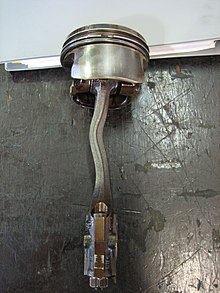
Hydrolock
Hydrolock
Last edited by ymeski56; Sep 30, 2011 at 11:03 AM.