


So


Thread Starter
Junior Member
Joined: May 2018
Posts: 2
Likes: 0
 So
So
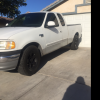
So I have a 2003 f150 triton 5.4
Now when I drive the truck for about 15 minutes the passenger side catalytic converter smokes and leaks coolant. But when idling the truck for 20-30 minutes doesnt smoke or leak coolant.
Now when I drive the truck for about 15 minutes the passenger side catalytic converter smokes and leaks coolant. But when idling the truck for 20-30 minutes doesnt smoke or leak coolant.


Senior Member
Joined: Dec 2011
Posts: 598
Likes: 16
From: high desert
I've never experienced coolant just dripping from a cat.  what you're seeing is just water... which is normal. As for the smoke, you may have an oil leak somewhere that's dripping on the exhaust
what you're seeing is just water... which is normal. As for the smoke, you may have an oil leak somewhere that's dripping on the exhaust


98 F150 5.4L E40D/4R100

Joined: Nov 2006
Posts: 28,519
Likes: 7,630
From: MI
You would know if it was coolant, smell it for sure an, unmistakable aroma... don't lick it as much as you want to, you'll get sick. Keep the animals caged until a proper determination has been made. The downstream cats in these trucks like to crack right across the bottom. Usually why they leak condensation from there. Can't see the crack unless you remove the heat shield. BUT, the cone/brick can still be intact. The shell splits...or housing. I'm not sure why you think it's coolant, do you have evidence to support or are you just spinning?
The problem stems from the vehicles drive and heat cycle. Worsens substantially if it gets cold at night and when the isn't driven enough to run full cycle. Moisture builds to point of extreme. This isn't just occurring in the exhaust, it is also occurring inside the engine. Look under your oil fill cap to determine the amount of moisture by-product that has contaminated the engine. This can be bad if you continue to run the vehicle for just short periods of time. High idle times and short trips can/WILL destroy the engine if you don't keep an eye on it. The fix, IF it's not to late is to just drive the vehicle so it can run full cycle and burn off the moisture. Like say, run it down the expressway as fast as the speed limit dictates for 20 or 30 miles. This will clean it out. If it's severe under the oil cap, change the oil immediately after you have cleaned it out with a 30 mile run. You oil will be contaminated. You can usually catch it in time, just keep it in the back of your head, it needs to be driven once in awhile, for a good jaunt. Otherwise, the catastrophic will come sooner than later.
The problem stems from the vehicles drive and heat cycle. Worsens substantially if it gets cold at night and when the isn't driven enough to run full cycle. Moisture builds to point of extreme. This isn't just occurring in the exhaust, it is also occurring inside the engine. Look under your oil fill cap to determine the amount of moisture by-product that has contaminated the engine. This can be bad if you continue to run the vehicle for just short periods of time. High idle times and short trips can/WILL destroy the engine if you don't keep an eye on it. The fix, IF it's not to late is to just drive the vehicle so it can run full cycle and burn off the moisture. Like say, run it down the expressway as fast as the speed limit dictates for 20 or 30 miles. This will clean it out. If it's severe under the oil cap, change the oil immediately after you have cleaned it out with a 30 mile run. You oil will be contaminated. You can usually catch it in time, just keep it in the back of your head, it needs to be driven once in awhile, for a good jaunt. Otherwise, the catastrophic will come sooner than later.
Last edited by Jbrew; May 10, 2018 at 04:53 PM.