


E-locker question

Senior Member


Joined: Jun 2011
Posts: 243
Likes: 17
From: Arkansas


Senior Member
Joined: Mar 2011
Posts: 2,225
Likes: 169

The problem with Ford's "limited slip" is in the implementation, not the concept.
In theory, a mechanical "limited slip" differential allows the rotational speed of the two rear wheels to be different when needed, like going around the corner, but "limit" that speed difference when traction is needed, like in a straight line on a slippery surface. It does this with springs and friction disks. If the springs are too strong and the disks have too much friction, the LS resists too much slip when going around corners and makes the truck jumpy.
Ford puts in relatively light springs and relatively un-grippy friction disks, because the truck goes around corners every day, but only needs extra traction once in a while. The result is that they really don't work that well even when new, and get even worse over time.
There are better mechanical limited slip designs that use gears instead of clutches, but they are far more expensive, and not generally used by manufacturers.
"Electronic" limited slip systems use the ABS sensors to count wheel RPM's, a computer to determine if one wheel is spinning, and the vehicle brakes to apply resistance to the spinning wheel, thus transferring power to the other wheel. This works pretty well, with the downside of heating up the brakes (and potentially fading the brakes) if it is used to much. Still way better than a clutch-pack LS in your rear end, which also heats up and fades just like a clutch when abused. But like all computer systems, how well it works is largely dependent on how it is programmed.
In theory, a mechanical "limited slip" differential allows the rotational speed of the two rear wheels to be different when needed, like going around the corner, but "limit" that speed difference when traction is needed, like in a straight line on a slippery surface. It does this with springs and friction disks. If the springs are too strong and the disks have too much friction, the LS resists too much slip when going around corners and makes the truck jumpy.
Ford puts in relatively light springs and relatively un-grippy friction disks, because the truck goes around corners every day, but only needs extra traction once in a while. The result is that they really don't work that well even when new, and get even worse over time.
There are better mechanical limited slip designs that use gears instead of clutches, but they are far more expensive, and not generally used by manufacturers.
"Electronic" limited slip systems use the ABS sensors to count wheel RPM's, a computer to determine if one wheel is spinning, and the vehicle brakes to apply resistance to the spinning wheel, thus transferring power to the other wheel. This works pretty well, with the downside of heating up the brakes (and potentially fading the brakes) if it is used to much. Still way better than a clutch-pack LS in your rear end, which also heats up and fades just like a clutch when abused. But like all computer systems, how well it works is largely dependent on how it is programmed.
Last edited by pfbz; Jul 22, 2011 at 08:22 PM.
Senior Member
Joined: Dec 2010
Posts: 7,877
Likes: 368
From: North Dakota
Pull out that truck ? LOL. Actually I had AAA at the time and called them, but they would not come in my backyard and pull me out. They have since been dropped. It was spring time and it was a little soft in the backyard. I also had a 4WD ranger at the time and did attempt to pull it out but stopped when it started getting stuck too.
Actually every LS truck I've had did the same thing. If one wheel doesn't spin, the other one does. That's the reason why I now have a locker.
Actually every LS truck I've had did the same thing. If one wheel doesn't spin, the other one does. That's the reason why I now have a locker.
What you describe sounds exactly like an open diff to me. Look up your vin number to get your window sticker and I bet you have an open diff and not the LS.
Roll Tide
Joined: Oct 2010
Posts: 1,561
Likes: 3
Originally Posted by SultanGris
interesting. Are you sure you have a LS? mine have always spun both, however I know damn well in the older ones the clutches were never replaced so perhaps they just wore out and fused together and acted like a locker, haha! My 2010 spins them both every time though, not sure what to tell ya, other than it sounds to me like you dont have LS.
I have to ask however, why did you **** around for 2 days, why didnt you get a rope and another truck and pull it out in 10 minutes?
I have to ask however, why did you **** around for 2 days, why didnt you get a rope and another truck and pull it out in 10 minutes?
From My iPhone 5
Last edited by xdrockstar; Jul 22, 2011 at 11:39 PM.
Senior Member
Joined: Jun 2010
Posts: 983
Likes: 42
Nah.
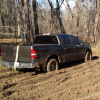
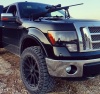
We were pulling a dump trailer out of the bush and this rig right here had to get towed out of less mud than that, on flat ground, locked.

I also drove it into a ditch full of snow to pull people around on sleds. Also didnt do a damn thing, once the truck sunk down.
Quite possibly the worst day for a tow truck driver since his winch was pulling HIS truck back into us, instead of us out of the ditch lol
Last edited by schissler; Jul 22, 2011 at 09:21 PM.
Senior Member
Joined: Jun 2010
Posts: 2,446
Likes: 3
From: Raiderland, TX
The problem with Ford's "limited slip" is in the implementation, not the concept.
In theory, a mechanical "limited slip" differential allows the rotational speed of the two rear wheels to be different when needed, like going around the corner, but "limit" that speed difference when traction is needed, like in a straight line on a slippery surface. It does this with springs and friction disks. If the springs are too strong and the disks have too much friction, the LS resists too much slip when going around corners and makes the truck jumpy.
Ford puts in relatively light springs and relatively un-grippy friction disks, because the truck goes around corners every day, but only needs extra traction once in a while. The result is that they really don't work that well even when new, and get even worse over time.
There are better mechanical limited slip designs that use gears instead of clutches, but they are far more expensive, and not generally used by manufacturers.
"Electronic" limited slip systems use the ABS sensors to count wheel RPM's, a computer to determine if one wheel is spinning, and the vehicle brakes to apply resistance to the spinning wheel, thus transferring power to the other wheel. This works pretty well, with the downside of heating up the brakes (and potentially fading the brakes) if it is used to much. Still way better than a clutch-pack LS in your rear end, which also heats up and fades just like a clutch when abused. But like all computer systems, how well it works is largely dependent on how it is programmed.
In theory, a mechanical "limited slip" differential allows the rotational speed of the two rear wheels to be different when needed, like going around the corner, but "limit" that speed difference when traction is needed, like in a straight line on a slippery surface. It does this with springs and friction disks. If the springs are too strong and the disks have too much friction, the LS resists too much slip when going around corners and makes the truck jumpy.
Ford puts in relatively light springs and relatively un-grippy friction disks, because the truck goes around corners every day, but only needs extra traction once in a while. The result is that they really don't work that well even when new, and get even worse over time.
There are better mechanical limited slip designs that use gears instead of clutches, but they are far more expensive, and not generally used by manufacturers.
"Electronic" limited slip systems use the ABS sensors to count wheel RPM's, a computer to determine if one wheel is spinning, and the vehicle brakes to apply resistance to the spinning wheel, thus transferring power to the other wheel. This works pretty well, with the downside of heating up the brakes (and potentially fading the brakes) if it is used to much. Still way better than a clutch-pack LS in your rear end, which also heats up and fades just like a clutch when abused. But like all computer systems, how well it works is largely dependent on how it is programmed.
Senior Member
Joined: Jun 2010
Posts: 2,446
Likes: 3
From: Raiderland, TX
interesting. Are you sure you have a LS? mine have always spun both, however I know damn well in the older ones the clutches were never replaced so perhaps they just wore out and fused together and acted like a locker, haha! My 2010 spins them both every time though, not sure what to tell ya, other than it sounds to me like you dont have LS.
I have to ask however, why did you **** around for 2 days, why didnt you get a rope and another truck and pull it out in 10 minutes?
I have to ask however, why did you **** around for 2 days, why didnt you get a rope and another truck and pull it out in 10 minutes?
Senior Member
Joined: Jun 2011
Posts: 243
Likes: 17
From: Arkansas
Nah.
We were pulling a dump trailer out of the bush and this rig right here had to get towed out of less mud than that, on flat ground, locked.
I also drove it into a ditch full of snow to pull people around on sleds. Also didnt do a damn thing, once the truck sunk down.
Quite possibly the worst day for a tow truck driver since his winch was pulling HIS truck back into us, instead of us out of the ditch lol
We were pulling a dump trailer out of the bush and this rig right here had to get towed out of less mud than that, on flat ground, locked.
I also drove it into a ditch full of snow to pull people around on sleds. Also didnt do a damn thing, once the truck sunk down.
Quite possibly the worst day for a tow truck driver since his winch was pulling HIS truck back into us, instead of us out of the ditch lol
Senior Member
Joined: Dec 2010
Posts: 7,877
Likes: 368
From: North Dakota
I always shut the traction control off, cause it wont let any tires spin with it on! I have a 2010 so I dont have the electronic wheel slip like the 11's do. Ive been testing it out on my 2010 a little lately and they both always spin in mud, on asphalt, on dirt, on gravel, on grass and even with one on gravel and one on grass they spin both every time, I think you guys are crazy, lol! They have always both spun in every situation ive ever put them in on my previous ford vehicles also.