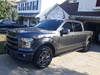
Aux Lighting


Thread Starter
Junior Member
Joined: Apr 2018
Posts: 4
Likes: 0
 Aux Lighting
Recently I installed a extra lawnmower battery in my backseat to power all my aux lighting. I have couple LED pods, a few rock lights, and a 22 inch LED lightbar. I have a wire connected from the positive and negative terminals and have connected the lights to that. I have hardly used the lights at all, but everytime I go to use them the battery is ran down. For some reason im having constant power being drained from the batter. Any suggestions on what to change/add or why the battery is being run down? Thanks!



Senior Member
Joined: Jul 2015
Posts: 3,627
Likes: 795
From: Michigan


Trending Topics
Thread Starter
Junior Member
Joined: Apr 2018
Posts: 4
Likes: 0

Now an XLT in Colorado

Joined: Aug 2016
Posts: 5,977
Likes: 3,170
From: Colorado
Honestly, I thought this was a troll.
OK, here you go:
Get rid of that lawnmower battery, and connect your lights to the truck's existing electrical system via proper switches, relays, and wiring. Consider upgrading to a 130A 3G alternator if yours is only a 90A unit.
OK, here you go:
Get rid of that lawnmower battery, and connect your lights to the truck's existing electrical system via proper switches, relays, and wiring. Consider upgrading to a 130A 3G alternator if yours is only a 90A unit.
Last edited by OhioLariat; Dec 15, 2019 at 12:04 AM.

Senior Member
Joined: Dec 2016
Posts: 2,122
Likes: 390
From: Midwest USA
The problem with permanently connecting two batteries in parallel is the stronger one will discharge (try to charge) the other battery when the engine is off then vice versa depending on the two batteries amp hour ratings.
With the the long wires going to the (gulp!) lawn mower battery there could be a large enough voltage drop across them to screw up charging from the alternator.
The safe charging rates between the larger and smaller batteries are different meaning the smaller battery could be over charged resulting in degradation and finally failure of the battery.
Further, if the smaller battery becomes dead shorted there is no appreciable impedance to restrict its charging current, a potential fire or explosion hazard.
And even further yet, putting a lead acid battery in the cabin is a potential safety hazard due to hydrogen gas emission another potential safety hazard.
With the the long wires going to the (gulp!) lawn mower battery there could be a large enough voltage drop across them to screw up charging from the alternator.
The safe charging rates between the larger and smaller batteries are different meaning the smaller battery could be over charged resulting in degradation and finally failure of the battery.
Further, if the smaller battery becomes dead shorted there is no appreciable impedance to restrict its charging current, a potential fire or explosion hazard.
And even further yet, putting a lead acid battery in the cabin is a potential safety hazard due to hydrogen gas emission another potential safety hazard.