


360 or 390

Senior Member
Joined: Aug 2012
Posts: 1,734
Likes: 55
From: MN

I would personally go with the 390. To me the 360 sucks way too much gas for the power that it produces. they are both good motors and both beasts, but 390 has the upper hand.
I also HEARD... that the 360 had a lot of timing problems, never had experience with it but talked and know people who have. Like i said I HEARD. Not saying they do or do not.
I also HEARD... that the 360 had a lot of timing problems, never had experience with it but talked and know people who have. Like i said I HEARD. Not saying they do or do not.
Senior Member
Joined: Oct 2007
Posts: 2,781
Likes: 113
From: NV
The 352. The series started in the Edsel with a 312. Over the years it has been bored and stroked into a 332, 352, 360, 372, 406, and 428 retaining essentially the same block but various combinations of heads, pistons and crankshafts. From the 352 on, all the blocks oroginated as 352's. So a 390 will actually have 352 stamped in the casting on the front of the motor right below the head on the right side. There were performance versions of the 352 and on up used in some of the best muscle cars of the day. Lots of performance parts available. The 360 was built primarily as a lower compression truck engine. Still a god motor amd can be warmed up substantially with speed parts but i personally like the 390 in a truck. Lots of torque with a mild RV cam. Lots of info on the net on the FE series of Ford motors. They were manufactured from the fifties into the late seventies and ended their lives in mostly truck applications.
 Will be good to have that info when I eventually get back into another 70s model Ford truck.
My dad's 360 was a great motor but he did have a lot of parts into it. He had an RV cam, Edelbrock intake, Edelbrock carb, headers etc. That thing was fun to drive.

Senior Member
Joined: Feb 2010
Posts: 328
Likes: 23
They are large displacement motors and will eat some fuel. As far as timing issues, I have never had any problems. A great upgrade to these motors is a Unilite solid state distributor. Gets rid of the old points system and resultant timing issues that can come up as points start to wear. It is a "drop in" installation. IMO it was the single best upgrade I put into my 390. It dosent give any more horsepower but makes it start every time, does away with replacing points and makes for a smooth and efficient firing engine. The FE series are great motors. Overtaken now by more modern technology but can still be built tp be potent motors especially for lower RPM truck applications. Real stump pullers that can scoot away from a stop sign really quick.

Thread Starter
Member
Joined: Dec 2011
Posts: 42
Likes: 1
From: Michigan
Thanks for the input.
Thanks for the input everyone. I know a good bit about the FE engines from the 332 to the 428. I have had the 390 in a 68 and a 360 in a 69 previously. I know that at least the 360 and 390 have the same block. Most everyone that wanted more power either got a 390 or swapped out the rotating assembly of a 390 into their 360.
I figured since I haven't swapped out rotating assemblies and matched up push rods before I would ask the opinion of the community. You helped me make my decision. I will keep the 360 and go with the Edelbrock Performer intake along with the Comp Cams 268H SK kit. The engine is a 6 year old crate engine and is reliable but doesn't have much power. I am looking for just some fun power for occasional lead footing. Thanks again everyone.
I figured since I haven't swapped out rotating assemblies and matched up push rods before I would ask the opinion of the community. You helped me make my decision. I will keep the 360 and go with the Edelbrock Performer intake along with the Comp Cams 268H SK kit. The engine is a 6 year old crate engine and is reliable but doesn't have much power. I am looking for just some fun power for occasional lead footing. Thanks again everyone.
Member
Joined: Jan 2013
Posts: 31
Likes: 2
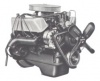
360 and 390 both are same blocks with same bore, only stroke is different. Here is differences for the FE series.
All FE series engines have same bore spacing, deck height and external dimensions. In 1966, the 352/390/410 CIDs and some 428 CIDs used the PCV system. The oil filler tube and road draft tube were deleted. The 1966 427 CID was exempted.
In 1958, after 90 days, a spring and thrust button were added to end of camshaft. Oil galleries added for hydraulic lifters.
In 1961, blocks received deeper holes for head bolts and main bearing cap bolts. The 390 CID was introduced.
In 1963, alternators became available and required an additional hole tapped in the block for mounting.
Pre-1965 blocks used 2-bolt engine mounts, later blocks featured 3-bolt mounts.
In 1965, the 427 “Side Oiler” block was added.
In 1966 the 428 CID and C-6 automatic transmission was introduced. A 410 CID was made available for 1966-67 Mercury vehicles only.
In 1967, the 360 CID was introduced and was offered only in pickups until 1976.
FE production in cars ended late in 1971. Left over blocks were used up in 1972-76 pickups. Displacements could range from 360 CID to 428 CID.
All FE engines used full- floating wrist pins. FE blocks have 352 stamped below left cylinder head on front of block.
All FE engines are balanced internally by six counter weights (zero balanced), except 410/428 CID engines which are balanced by adding weight to the flex plate and vibration damper (Detroit balanced).
FE engines like the 332/352/360/361 used full skirt pistons, while the rest used a slipper skirt piston.
Late 1975-76 FE engines used cylinder heads designed for unleaded fuel. These heads featured harden nickel exhaust valve seats and bronze guides.
Firing order is 1-5-4-2-6-3-7-8.
If you plan to up grade your engine with a higher lift camshaft and valve springs, replace stock aluminum stands with 406/427 Low Riser stands, part # C3AZ-6531-A.
Due to Fe block shortage in 1976, some FT series blocks were substituted in pickups. They were fitted with the necessary FE hardware, heads, and intakes. These blocks featured 4-hole engine mounts, cast in higher-grade alloys, and featured thicker main-bearing caps and webs than standard FE engines. The FT block had a hole for air-compressor oil drain (air-brakes). FT blocks had a mirror image of 105 stamped in place of 352 on left front of block. Dual roller timing chain and sprockets was a standard feature on these engines.
All 427 blocks featured screw-in core plugs and cross-bolted main bearing caps at 2-3-4 journals. Spacers and main bearing caps are matched sets. If different spacers are used, they must be fitted to the engine block.
The “Side Oiler” block was introduced in 1965 on the SOHC engine. All blocks cast there on, are “Side Oilers”. The main oil gallery ran down the left side of the block and fed the main bearings directly. Since there are no grooves in the second and fourth cam journals, these engines require camshafts with grooves on # 2 and # 4 bearing journals for oiling.
Late 1966 blocks and up, featured reinforced cylinder walls to prevent cracking under extreme racing conditions. 25-nickel alloy casings were produced from late 1966-68.
All 427 blocks were cast to use mechanical lifters only. The only exception was the 1968 hydraulic 427 engine. Mechanical lifter engines used adjustable 1.76 ratio rockers, while the hydraulic lifter engine used non-adjustable 1.73 ratio rockers.
All intake/cylinder head configurations are available in both cast iron and aluminum castings. Aluminum castings are hot items today.
If a 427 block needs to be re-bored, it must be sleeved and there is no exceptions to this.
All 427 engines used forged extruded aluminum pistons.
3 different rocker stands were used;
cast iron C3AZ-6531-A 406/427 Low Riser
cast iron C3AE-6531-A 427 High Riser
cast iron C5AZ-6531-A 427 Medium Riser, Tunnel Port
aluminum C2AZ-6531-B 427 hydraulic lifter engine
A NASCAR rod was available. This connecting rod weighed 300 grams! They were fully polished and utilize high textile, full-bodied 7/16" capscrews and required a special NASCAR crankshaft with wider journals. This combination was intended for full all-out racing.
The Medium Riser Intake will fit FE cylinder heads measuring 1.93” to 2.26” vertically. This includes all standard passenger cars/trucks from 1958-65 and most 1966-76 engines. This is an easy way to boost performance on these engines.
All FE series engines have same bore spacing, deck height and external dimensions. In 1966, the 352/390/410 CIDs and some 428 CIDs used the PCV system. The oil filler tube and road draft tube were deleted. The 1966 427 CID was exempted.
In 1958, after 90 days, a spring and thrust button were added to end of camshaft. Oil galleries added for hydraulic lifters.
In 1961, blocks received deeper holes for head bolts and main bearing cap bolts. The 390 CID was introduced.
In 1963, alternators became available and required an additional hole tapped in the block for mounting.
Pre-1965 blocks used 2-bolt engine mounts, later blocks featured 3-bolt mounts.
In 1965, the 427 “Side Oiler” block was added.
In 1966 the 428 CID and C-6 automatic transmission was introduced. A 410 CID was made available for 1966-67 Mercury vehicles only.
In 1967, the 360 CID was introduced and was offered only in pickups until 1976.
FE production in cars ended late in 1971. Left over blocks were used up in 1972-76 pickups. Displacements could range from 360 CID to 428 CID.
All FE engines used full- floating wrist pins. FE blocks have 352 stamped below left cylinder head on front of block.
All FE engines are balanced internally by six counter weights (zero balanced), except 410/428 CID engines which are balanced by adding weight to the flex plate and vibration damper (Detroit balanced).
FE engines like the 332/352/360/361 used full skirt pistons, while the rest used a slipper skirt piston.
Late 1975-76 FE engines used cylinder heads designed for unleaded fuel. These heads featured harden nickel exhaust valve seats and bronze guides.
Firing order is 1-5-4-2-6-3-7-8.
If you plan to up grade your engine with a higher lift camshaft and valve springs, replace stock aluminum stands with 406/427 Low Riser stands, part # C3AZ-6531-A.
Due to Fe block shortage in 1976, some FT series blocks were substituted in pickups. They were fitted with the necessary FE hardware, heads, and intakes. These blocks featured 4-hole engine mounts, cast in higher-grade alloys, and featured thicker main-bearing caps and webs than standard FE engines. The FT block had a hole for air-compressor oil drain (air-brakes). FT blocks had a mirror image of 105 stamped in place of 352 on left front of block. Dual roller timing chain and sprockets was a standard feature on these engines.
All 427 blocks featured screw-in core plugs and cross-bolted main bearing caps at 2-3-4 journals. Spacers and main bearing caps are matched sets. If different spacers are used, they must be fitted to the engine block.
The “Side Oiler” block was introduced in 1965 on the SOHC engine. All blocks cast there on, are “Side Oilers”. The main oil gallery ran down the left side of the block and fed the main bearings directly. Since there are no grooves in the second and fourth cam journals, these engines require camshafts with grooves on # 2 and # 4 bearing journals for oiling.
Late 1966 blocks and up, featured reinforced cylinder walls to prevent cracking under extreme racing conditions. 25-nickel alloy casings were produced from late 1966-68.
All 427 blocks were cast to use mechanical lifters only. The only exception was the 1968 hydraulic 427 engine. Mechanical lifter engines used adjustable 1.76 ratio rockers, while the hydraulic lifter engine used non-adjustable 1.73 ratio rockers.
All intake/cylinder head configurations are available in both cast iron and aluminum castings. Aluminum castings are hot items today.
If a 427 block needs to be re-bored, it must be sleeved and there is no exceptions to this.
All 427 engines used forged extruded aluminum pistons.
3 different rocker stands were used;
cast iron C3AZ-6531-A 406/427 Low Riser
cast iron C3AE-6531-A 427 High Riser
cast iron C5AZ-6531-A 427 Medium Riser, Tunnel Port
aluminum C2AZ-6531-B 427 hydraulic lifter engine
A NASCAR rod was available. This connecting rod weighed 300 grams! They were fully polished and utilize high textile, full-bodied 7/16" capscrews and required a special NASCAR crankshaft with wider journals. This combination was intended for full all-out racing.
The Medium Riser Intake will fit FE cylinder heads measuring 1.93” to 2.26” vertically. This includes all standard passenger cars/trucks from 1958-65 and most 1966-76 engines. This is an easy way to boost performance on these engines.
Thread Starter
Member
Joined: Dec 2011
Posts: 42
Likes: 1
From: Michigan
I ended up staying with the 360 and installing the 268H cam kit along with performer intake and holley 600CFM carb. This along with the headers and dual exhaust should give me some pep. During the assembly I noticed a push rod on no# 2cylinder was slightly bent. I called and alocal shop can get them overnight. Once that arrives tomorrow I will be breaking in the cam as soon as possible. If anyone can guess how much more power this will give me would be great. I was thinking 50Hp couldn't guess torque myself. Does this sound right?
Last edited by chuck2422; Mar 20, 2013 at 03:46 PM.

Junior Member
Joined: Feb 2009
Posts: 14
Likes: 0
From: Canada
The 360 and 390 are both part of the Ford "Ford/Edsel" (FE) series of motors. Just diffefences in bore and stroke. In fact if you look close you will see "352" stamped into the block casting on the front of the engine. Both the 360 and 390 originated from thos block and all three have the same dimensions. Dont even have to change motor mounts to change between the three.