


Looking at a 2016 Lariat


Thread Starter
Member


Joined: Oct 2023
Posts: 43
Likes: 10
 Looking at a 2016 Lariat
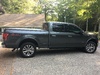
I'm looking at a 2016 3.5 Lariat with 74k miles. One owner truck.
VIN: 1FTFW1EG8GKD44730
Anything specific I should look for/ask? I'm a "powerstroke guy". I've had a late 7.3, drove a 6.0 for 13 years and currently own a '21 F350 Lariat 6.7. I've been driving diesels for 25 years, so I feel a litel out of touch with the gasser world. What is preferred...3.5 or 5.0 V8 and why?
Thanks!
VIN: 1FTFW1EG8GKD44730
Anything specific I should look for/ask? I'm a "powerstroke guy". I've had a late 7.3, drove a 6.0 for 13 years and currently own a '21 F350 Lariat 6.7. I've been driving diesels for 25 years, so I feel a litel out of touch with the gasser world. What is preferred...3.5 or 5.0 V8 and why?
Thanks!

5 Year Member


Joined: Jun 2019
Posts: 500
Likes: 283
From: South Central Kansas
You're going to incite a small riot, but....
I personally prefer the 5.0L V8 engine. It isn't quite as powerful as the Ecoboost, but it's far less complex, and has fewer moving parts to fail. After building many turbo cars, I learned where engines fail, and high pressure turbocharging is hard on rod bearings and head gaskets, especially if you do a lot of towing, and you work it hard.
That said, everyone has a different situation, and different things work better for different people. In MY case, the V8 was the way to go. And to be fair, I LOVE the sound it makes.
Tim
I personally prefer the 5.0L V8 engine. It isn't quite as powerful as the Ecoboost, but it's far less complex, and has fewer moving parts to fail. After building many turbo cars, I learned where engines fail, and high pressure turbocharging is hard on rod bearings and head gaskets, especially if you do a lot of towing, and you work it hard.
That said, everyone has a different situation, and different things work better for different people. In MY case, the V8 was the way to go. And to be fair, I LOVE the sound it makes.
Tim

Community Team

Joined: Jun 2016
Posts: 8,978
Likes: 7,513
From: Vermont
You're going to incite a small riot, but....
I personally prefer the 5.0L V8 engine. It isn't quite as powerful as the Ecoboost, but it's far less complex, and has fewer moving parts to fail. After building many turbo cars, I learned where engines fail, and high pressure turbocharging is hard on rod bearings and head gaskets, especially if you do a lot of towing, and you work it hard.
I personally prefer the 5.0L V8 engine. It isn't quite as powerful as the Ecoboost, but it's far less complex, and has fewer moving parts to fail. After building many turbo cars, I learned where engines fail, and high pressure turbocharging is hard on rod bearings and head gaskets, especially if you do a lot of towing, and you work it hard.
No offense, but a lot of this is a bunch of BS misinformation and doesn’t pertain to the 3.5 or 2.7 EB. There have been zero failure point threads for any of possible issues that you bring up.
Also turbos, which are NOT a known failure point in any of these engines. Cam phasers are the main issue on the 3.5 EB. Though, while not as prone to failure, 5.0’s also have cam phasers and are VERY complex engines.
How many 3.5 and 2.7 EcoBoost trucks have you owned and what issues did you personally have?
The 3.5 EB is likely the best towing engine, actually.
If you simply like a V8, sure, say why you like it. But don’t spread misinformation regarding the other engines. That’s what causes issues.
The OP’s questions wouldn’t incite a smal right, but your answers are more likely to do that because they’re a bunch of non factual and spread internet nonsense misinformation.
Last edited by 2008__XL; Dec 5, 2023 at 12:07 PM.


I’d stay far away from turbos…super new technology that’s prone to fail….hahahahaha.
just kidding.
depends on what you want to do with the truck. I’ve had 2 3.5’s, a 2.7, and a 5.0. Just every day driving, I prefer the 3.5 but the 2.7 is a close tie. For towing I like the 3.5. If you want noise or plan to supercharge the truck, get the V8. For long highway commutes, 2.7.
good luck, everyone has an opinion…ask follow up questions like how many trucks they’ve owned with those specific engines…gears and which transmission also plays a role in the opinion generating game
just kidding.
depends on what you want to do with the truck. I’ve had 2 3.5’s, a 2.7, and a 5.0. Just every day driving, I prefer the 3.5 but the 2.7 is a close tie. For towing I like the 3.5. If you want noise or plan to supercharge the truck, get the V8. For long highway commutes, 2.7.
good luck, everyone has an opinion…ask follow up questions like how many trucks they’ve owned with those specific engines…gears and which transmission also plays a role in the opinion generating game

No fart cans allowed

Joined: Mar 2016
Posts: 4,342
Likes: 2,367
From: MO
Every engine has its pluses and minuses. It's pure malarkey that the 5.0 is a less complex engine than either ecoboost choice. Perform your due diligence, make your choice, and drive it.
If you are using the new-to-you truck mostly as a daily driver/commuter, my opinion is the 2.7 ecoboost is probably the best choice.
If you are using the new-to-you truck mostly as a daily driver/commuter, my opinion is the 2.7 ecoboost is probably the best choice.
Thread Starter
Member
Joined: Oct 2023
Posts: 43
Likes: 10
74k miles not considered a lot? On a powerstroke 74k is barely getting it broken in. I’ve heard the 3.5 is a good platform. I’ve never ever had an issue with any of the turbos on my diesels so I’m not worried about turbos on the ecoboosts.
5 Year Member
Joined: Jun 2019
Posts: 500
Likes: 283
From: South Central Kansas
@UlrichWolf
No offense, but a lot of this is a bunch of BS misinformation and doesn’t pertain to the 3.5 or 2.7 EB. There have been zero failure point threads for any of possible issues that you bring up.
Also turbos, which are NOT a known failure point in any of these engines. Cam phasers are the main issue on the 3.5 EB. Though, while not as prone to failure, 5.0’s also have cam phasers and are VERY complex engines.
How many 3.5 and 2.7 EcoBoost trucks have you owned and what issues did you personally have?
The 3.5 EB is likely the best towing engine, actually.
If you simply like a V8, sure, say why you like it. But don’t spread misinformation regarding the other engines. That’s what causes issues.
The OP’s questions wouldn’t incite a smal right, but your answers are more likely to do that because they’re a bunch of non factual and spread internet nonsense misinformation.
No offense, but a lot of this is a bunch of BS misinformation and doesn’t pertain to the 3.5 or 2.7 EB. There have been zero failure point threads for any of possible issues that you bring up.
Also turbos, which are NOT a known failure point in any of these engines. Cam phasers are the main issue on the 3.5 EB. Though, while not as prone to failure, 5.0’s also have cam phasers and are VERY complex engines.
How many 3.5 and 2.7 EcoBoost trucks have you owned and what issues did you personally have?
The 3.5 EB is likely the best towing engine, actually.
If you simply like a V8, sure, say why you like it. But don’t spread misinformation regarding the other engines. That’s what causes issues.
The OP’s questions wouldn’t incite a smal right, but your answers are more likely to do that because they’re a bunch of non factual and spread internet nonsense misinformation.
Second, I base this opinion on 30 years of experience building engines. Let's start with the oil. Your engine bearings are lubricated by a film of oil, which can get squeezed out. A normally aspirated engine doesn't have this concern unless the engine is used in a lot of low RPM, high load scenarios, and the fact that a N/A engine deals ONLY with a static compression ratio. Turbo engines on the other hand, have a static and a dynamic compression ratio. As you build boost, the pressurization from the turbocharger increases the effective compression, which increases the load on the rod bearings, and it can squeeze the oil film from between the rod bearing and the crank journal, which greatly increases the chance of spinning a rod bearing.
On the top end of the engine, this same effect can cause issues with head gaskets, and head warpage due to clamp load from the head bolts. Adding on to that, any time you create pressure, you create heat. This can create a plethora of issues that simply snowball. Many heat cycles, maybe there's a mixture issue at some point down the road, and it runs a little lean, MANY things can cause your EGT's to rise, and that's never good over the long haul.
As far as complexity, YES, the Ecoboost is quite a bit more complex, owing to the fact that it has not one, but two turbochargers., and the associated support hardware. Any time you have an intricate setup, you can introduce problems. There's no doubt that the Coyote is complex, but Ford has been building 4V Modular engines for a VERY long time now, and this is not that much more complex than the original 4.6 4V in the '93 Mark VIII.
I never said specifically that the Ecoboost has these problems (however I have seen plenty with rods kicked out of the block), I was giving a quick answer to a question I was asked.
What was MY preference and WHY?
Here's a tip - next time, instead of coming out with an offensive posture, just ASK me why I have that opinion. I promise you it isn't "because I can". There's solid experience behind my choices and my thought process, and I DID say that different things work for different people.
Tim
Trending Topics
Thread Starter
Member
Joined: Oct 2023
Posts: 43
Likes: 10
First - NOT spreading misinformation. I clearly stated that I (me, this guy) preferred the V8 over the turbo option.
Second, I base this opinion on 30 years of experience building engines. Let's start with the oil. Your engine bearings are lubricated by a film of oil, which can get squeezed out. A normally aspirated engine doesn't have this concern unless the engine is used in a lot of low RPM, high load scenarios, and the fact that a N/A engine deals ONLY with a static compression ratio. Turbo engines on the other hand, have a static and a dynamic compression ratio. As you build boost, the pressurization from the turbocharger increases the effective compression, which increases the load on the rod bearings, and it can squeeze the oil film from between the rod bearing and the crank journal, which greatly increases the chance of spinning a rod bearing.
On the top end of the engine, this same effect can cause issues with head gaskets, and head warpage due to clamp load from the head bolts. Adding on to that, any time you create pressure, you create heat. This can create a plethora of issues that simply snowball. Many heat cycles, maybe there's a mixture issue at some point down the road, and it runs a little lean, MANY things can cause your EGT's to rise, and that's never good over the long haul.
As far as complexity, YES, the Ecoboost is quite a bit more complex, owing to the fact that it has not one, but two turbochargers., and the associated support hardware. Any time you have an intricate setup, you can introduce problems. There's no doubt that the Coyote is complex, but Ford has been building 4V Modular engines for a VERY long time now, and this is not that much more complex than the original 4.6 4V in the '93 Mark VIII.
I never said specifically that the Ecoboost has these problems (however I have seen plenty with rods kicked out of the block), I was giving a quick answer to a question I was asked.
What was MY preference and WHY?
Here's a tip - next time, instead of coming out with an offensive posture, just ASK me why I have that opinion. I promise you it isn't "because I can". There's solid experience behind my choices and my thought process, and I DID say that different things work for different people.
Tim
Second, I base this opinion on 30 years of experience building engines. Let's start with the oil. Your engine bearings are lubricated by a film of oil, which can get squeezed out. A normally aspirated engine doesn't have this concern unless the engine is used in a lot of low RPM, high load scenarios, and the fact that a N/A engine deals ONLY with a static compression ratio. Turbo engines on the other hand, have a static and a dynamic compression ratio. As you build boost, the pressurization from the turbocharger increases the effective compression, which increases the load on the rod bearings, and it can squeeze the oil film from between the rod bearing and the crank journal, which greatly increases the chance of spinning a rod bearing.
On the top end of the engine, this same effect can cause issues with head gaskets, and head warpage due to clamp load from the head bolts. Adding on to that, any time you create pressure, you create heat. This can create a plethora of issues that simply snowball. Many heat cycles, maybe there's a mixture issue at some point down the road, and it runs a little lean, MANY things can cause your EGT's to rise, and that's never good over the long haul.
As far as complexity, YES, the Ecoboost is quite a bit more complex, owing to the fact that it has not one, but two turbochargers., and the associated support hardware. Any time you have an intricate setup, you can introduce problems. There's no doubt that the Coyote is complex, but Ford has been building 4V Modular engines for a VERY long time now, and this is not that much more complex than the original 4.6 4V in the '93 Mark VIII.
I never said specifically that the Ecoboost has these problems (however I have seen plenty with rods kicked out of the block), I was giving a quick answer to a question I was asked.
What was MY preference and WHY?
Here's a tip - next time, instead of coming out with an offensive posture, just ASK me why I have that opinion. I promise you it isn't "because I can". There's solid experience behind my choices and my thought process, and I DID say that different things work for different people.
Tim
5 Year Member
Joined: Jun 2019
Posts: 500
Likes: 283
From: South Central Kansas
I understand what you’re saying about added boost putting additional downward forces on rod bearings there is a well known issue of the 6.7 once it’s chipped or tuned. The rod bearing get “hammered” from the additional forces squeezing the film of oil out of the bearing and destroying the engine. That being said the stock 6.7 makes 1050 ft lbs. I don’t think the 3.5 is anywhere near approaching those numbers so how much tuning destroys the 3.5 rod bearings? Or do you see this destruction from stock 3.5’s?
Diesel engines have much larger bearing surface areas, so making an across the board comparison is pretty hard to do.
My explanation was more centered around turbocharged engines generally, not necessarily the Ecoboost family....but with tuning and increased boost pressures, these sorts of things are a possibility with anything, you know? And even without, if you get a truck that someone was less than kind to, who knows? Could be great, could go any time. The same can surely be said for anything mechanical, but it's my opinion that this risk is greater with anything with forced induction.
We always want more, right?
Tim