When you click on links to various merchants on this site and make a purchase, this can result in this site earning a commission. Affiliate programs and affiliations include, but are not limited to, the eBay Partner Network.
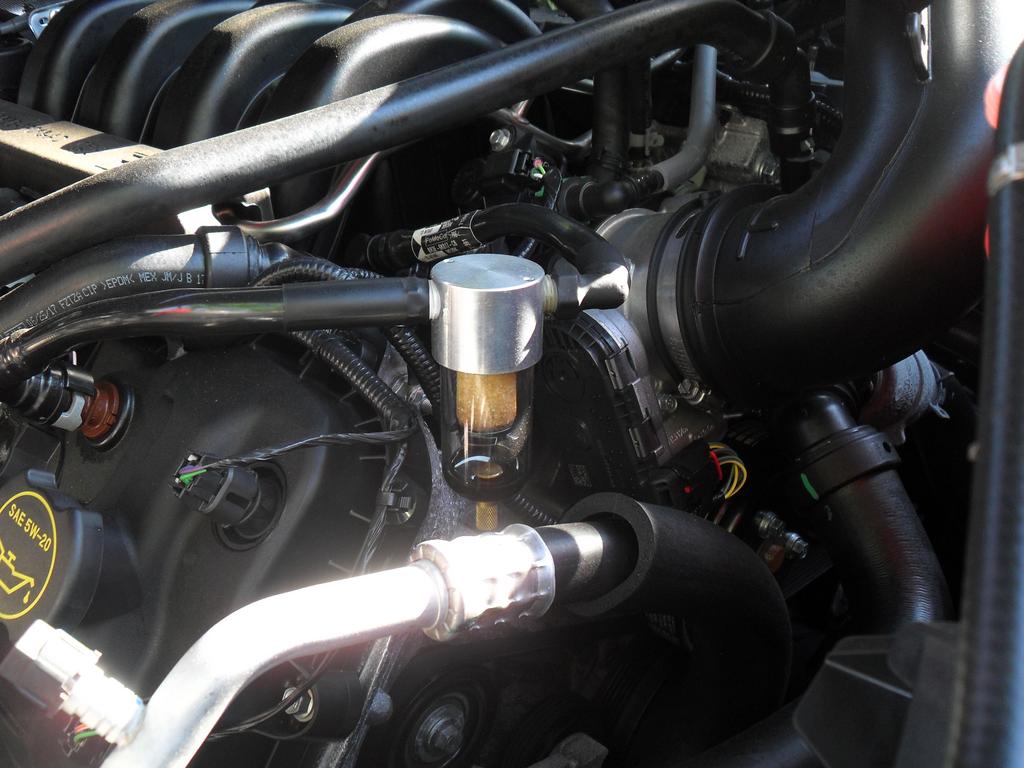
I have found a bunch of threads on the topic sorry if it's repeated info/ question. I am trying one and checked the can today after only about 500 miles with it installed. Part of me was expecting it to be empty with all the different opinions on them but i was shocked at how much oil was in there. The can was half full, probably a couple tablespoons. Wondering i should leave this thing on, right? It can't hurt anything? From what i understand, that oil just gets sucked into the intake and runs through your charge pipes and whatnot right? That oil is useless if not caught anyway? Thanks.
I say 100% use it if you don't mind spending the money and routinely emptying the can. These are MY common sense reasons...
1 - Have you ever taken an intake off on a ~50,000 mile PCV equipped vehicle? Always coated with a sh*t ton of oil. At least that's my experience. Seems like a good idea to stop that before it happens if possible. Compare it to grease filters above ovens, grills, and fryers in restaurants. If all that goes up there is "vapor" why install the filters (filter = catch can for us)? Because if you don't the exhaust vents get caked with oil and grease and grossness. Do we really need to argue about the benefits of keeping an intake clean?
2 - The biggest argument against them that I always see is "if the manufacturer thought it was needed they would put it on there at the factory". WRONG. Can you imagine buying a new car and having the instruction manual tell you to empty a can every few months? Daily drivers don't want to do that crap. They'd either bitch about it or ignore it completely. It would be a nightmare for the manufacturer. Never gonna happen by default.
3 - The old "it's just moisture" excuse. It's 100% not just moisture. I've saved my can drippings for the last year in a water bottle and I promise you I'm not drinking that "moisture".
Opinions are like *ssholes, everybody's got one. This thread like many before it will degrade into a strongly divided mess. In my research and personal use I've concluded they do some good and I have the money for one so I'm gonna use it.
( 3 ) air / oil separators cost me $ 150.00, & some labor to install them.
& unlike the one Ford has on the 2020 GT500, I don't put the waste products back in the crankcase.
.
.
I have the first gen. 3.5 TT and I installed a catch can system that included a smaller driver's side can. Worked just as designed for 3 seasons out of the year. In very cold weather the small driver's side can collects about 99% water and a lot of it quite quickly requiring you to drain that can weekly. During an extremely cold stretch(single digits), my oil light came on while driving up a long hill. Mind you, this was just 2 days after I emptied both cans. I only had a short drive but upon returning home, I opened my hood and oil was EVERYWHERE on my engine and dripping onto the driveway. The truck was 4 quarts LOW! The smaller DS can had filled with mostly water and froze solid causing a vacuum blockage that purged the oil from the engine through the opposite side valve cover gasket. I immediately removed the catch can system and returned the truck to stock. As I understand it, they've redesigned that system by deleting that can and it now recirculates that "vapor" directly into the DS valve cover. So why bother?! If you have a Gen. Two 3.5 TT, you have a dual delivery system for fuel that Ford designed to eliminate the problems of the recirculated oil build up in the Gen. Ones. If I knew then what I know now I'd be $450 richer...
I bought in to the oil separator hype when Ford moved the fuel injectors, and quickly set about to see how bad the valves are in my 2015, and found they didn't look any different than any other vehicles I've owned... at 100k miles. I was told there would be cylinder-starving levels of build up on the valves, but that isn't the case with my engine. I'll continue to monitor them, but it sounds like whatever issue some people have had, appears largely restricted to the early years of HPFS, and may not be due solely to the ingestion of crankcase vapors.
One thing I'm thinking is the amount of blow-by is steadily reducing as piston and cylinder tolerances get tighter and surface durability is improved.



 Catch cans