


programmer or chip or cam???


Senior Member
Joined: Dec 2011
Posts: 1,838
Likes: 41
From: Nova scotia

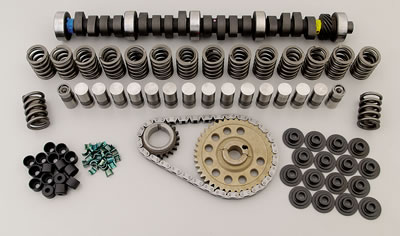
Scneiders has a ton of grinds for the 4.9 , right up to this monster, http://schneidercams.com/320-32FfordI6solid-1.aspx
specifications:
Part Number: 13906 Grind Number: 320-32 Intake Duration (gross): 320 Exhaust Duration (gross): 332 Intake Duration (.050”): 274 Exhaust Duration (.050”): 284 Intake Valve Lift*: .600" Exhaust Valve Lift*: .616" Lobe Separation: 108 Intake Valve Lash: .028" Exhaust Valve Lash: .030" RPM Range: 4500-8000 *Based on 1.6 Rocker Arm Ratio
**If you have any questions in regards to the compatibility with your set-up please call before you purchase**

Okie.
Joined: Nov 2010
Posts: 14,908
Likes: 42
From: Woodward, Oklahoma
Originally Posted by Scraptor
I gave them my money twice, and got garbage, i wouldn t do it again. Thats my comp cams experience.
Scneiders has a ton of grinds for the 4.9 , right up to this monster, http://schneidercams.com/320-32FfordI6solid-1.aspx
specifications:
Part Number: 13906 Grind Number: 320-32 Intake Duration (gross): 320 Exhaust Duration (gross): 332 Intake Duration (.050”): 274 Exhaust Duration (.050”): 284 Intake Valve Lift*: .600" Exhaust Valve Lift*: .616" Lobe Separation: 108 Intake Valve Lash: .028" Exhaust Valve Lash: .030" RPM Range: 4500-8000 *Based on 1.6 Rocker Arm Ratio
**If you have any questions in regards to the compatibility with your set-up please call before you purchase**
Senior Member
Joined: Dec 2011
Posts: 1,838
Likes: 41
From: Nova scotia
Because the lobe seperation angle is 110 , but the .050 duration is low, so you might get away with it, maybe not, what that means is the angle between the centerlines of the intake and exaust lobes of the cam are 110 degrees apart
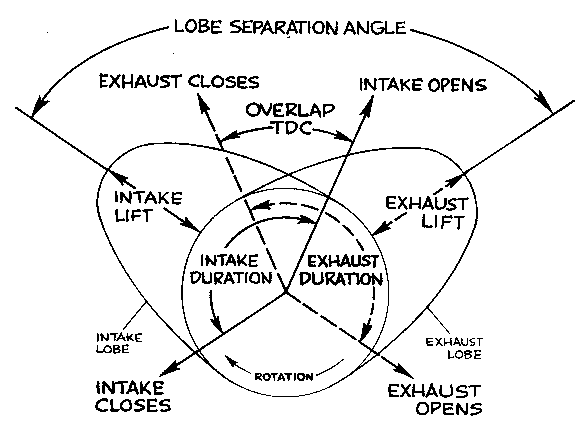
The tighter lobe seperation angle LSA means more overlap, during overlap both the intake and exaust valves are open. At higher rpm, this helps cylender filling by allowing the exiting gas pulse to pull air into the cylender, at low rpm it bleeds off cylender pressure, and causes low idle vacuum, causing map sensor errors, its also what causes the clipity clop clipity clop idle sound of a bigger cam. Y all wanna be old skewl, we all will skewl ya, kid.
The tighter lobe seperation angle LSA means more overlap, during overlap both the intake and exaust valves are open. At higher rpm, this helps cylender filling by allowing the exiting gas pulse to pull air into the cylender, at low rpm it bleeds off cylender pressure, and causes low idle vacuum, causing map sensor errors, its also what causes the clipity clop clipity clop idle sound of a bigger cam. Y all wanna be old skewl, we all will skewl ya, kid.

Thread Starter
Mr.
Joined: Apr 2011
Posts: 109
Likes: 0
From: houston
so i may get away with that cam even though is not computer compatable?
Also the other stuff I knew about. Also the cam i wanted was non-com"old Skewl"
but i dont want to kill my truck for a cam. It was my dads truck and i dont wana kill it with the wrong cam.
Also the other stuff I knew about. Also the cam i wanted was non-com"old Skewl"
but i dont want to kill my truck for a cam. It was my dads truck and i dont wana kill it with the wrong cam.

Junior Member

Joined: May 2012
Posts: 15
Likes: 8
Wow, there is some bad misinformation going on here. Allow me to offer a different opinion.
First of all, real chips work great. Fake ones aren't worth having. By fake, I mean those $25 resistors in a box you can buy on Ebay, that are designed to wire into the IAT sensor and fool the computer into thinking the air is cold. Those are junk.
By real, I mean an actual chip that plugs into the J3 port in the back of your computer, and takes over the programming, like SCT or a few other brands. There are no "programmers" for pre-1996 trucks, since they are all OBD1 and do not have flash-programmable chips in the computer. After 96, they're all reflashable, and can use any of the many OBD2 programming devices available for trucks.
If your truck is an 87, it's probably speed density, meaning it does not have a Mass Airflow Meter yet. Those older trucks use manifold vacuum, RPM and Intake air temps to determine fueling, combined with a Volumetric Efficiency table in the computer. With these older Speed Density trucks, you can get into real trouble when you increase the volumetric efficiency by swapping out cams, heads, or even exhaust.
Those things can be tuned for (on the dyno), but can't really be estimated on a mail order chip very well. That's a design limitation to that type of sytem. If those things were left alone, and you just wanted a nice simple way to improve performance some, run 93 octane and buy a chip made for that octane.
A chip can lean out the air/fuel ratio, improve your spark advance tables, and a host of other tricks to maximize performance. Anybody who says that doesn't work has never owned or programmed one. They are almost always the best bang for the buck, and eventually become necessary anyway, as you modify the truck.
In sharp contrast, put a larger cam in a speed density truck, and watch just how poor it runs. Unless the cam is so small that it's practically stock, an aftermarket cam will generally make the truck run like crap.
First of all, real chips work great. Fake ones aren't worth having. By fake, I mean those $25 resistors in a box you can buy on Ebay, that are designed to wire into the IAT sensor and fool the computer into thinking the air is cold. Those are junk.
By real, I mean an actual chip that plugs into the J3 port in the back of your computer, and takes over the programming, like SCT or a few other brands. There are no "programmers" for pre-1996 trucks, since they are all OBD1 and do not have flash-programmable chips in the computer. After 96, they're all reflashable, and can use any of the many OBD2 programming devices available for trucks.
If your truck is an 87, it's probably speed density, meaning it does not have a Mass Airflow Meter yet. Those older trucks use manifold vacuum, RPM and Intake air temps to determine fueling, combined with a Volumetric Efficiency table in the computer. With these older Speed Density trucks, you can get into real trouble when you increase the volumetric efficiency by swapping out cams, heads, or even exhaust.
Those things can be tuned for (on the dyno), but can't really be estimated on a mail order chip very well. That's a design limitation to that type of sytem. If those things were left alone, and you just wanted a nice simple way to improve performance some, run 93 octane and buy a chip made for that octane.
A chip can lean out the air/fuel ratio, improve your spark advance tables, and a host of other tricks to maximize performance. Anybody who says that doesn't work has never owned or programmed one. They are almost always the best bang for the buck, and eventually become necessary anyway, as you modify the truck.
In sharp contrast, put a larger cam in a speed density truck, and watch just how poor it runs. Unless the cam is so small that it's practically stock, an aftermarket cam will generally make the truck run like crap.