


Fuel issue


Thread Starter
Junior Member
Joined: Oct 2023
Posts: 6
Likes: 0
 Fuel issue
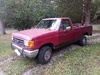
I have a 1988 F150 the fuel tanks are pressurizing and sending fuel back up the filler hoses I'm hoping somebody could help figure it out. Right now the rear leaf Springs are broken causing the of the rear of the bed is lower than the front of the truck. Is that what it could be?
Senior Member


Joined: Aug 2021
Posts: 995
Likes: 321
From: Maryland
Do you mean that both fuel caps have fuel running out when you remove them? Does it happen with the truck shut off, or while running? Does it only happen when trying to fill the tanks?
On my '88, if the filler necks are facing down hill, neither one will take fuel.
I did have the front tank fill the back tank due to debris in the Dual Function Reservoir (aka fuel tank selector valve) and a failing in tank fuel pump, in the front tank.
On my '88, if the filler necks are facing down hill, neither one will take fuel.
I did have the front tank fill the back tank due to debris in the Dual Function Reservoir (aka fuel tank selector valve) and a failing in tank fuel pump, in the front tank.
Thread Starter
Junior Member
Joined: Oct 2023
Posts: 6
Likes: 0
Fuel issue
Do you mean that both fuel caps have fuel running out when you remove them? Does it happen with the truck shut off, or while running? Does it only happen when trying to fill the tanks?
On my '88, if the filler necks are facing down hill, neither one will take fuel.
I did have the front tank fill the back tank due to debris in the Dual Function Reservoir (aka fuel tank selector valve) and a failing in tank fuel pump, in the front tank.
On my '88, if the filler necks are facing down hill, neither one will take fuel.
I did have the front tank fill the back tank due to debris in the Dual Function Reservoir (aka fuel tank selector valve) and a failing in tank fuel pump, in the front tank.
Senior Member
Joined: Aug 2021
Posts: 995
Likes: 321
From: Maryland
Just so I understand, how do you fuel the tanks if fuel is shooting out?
The possibilities I see are the fuel filler necks leaning down hill; the classic cross fill issue, caused by the Dual Function Reservoir not isolating one of the tanks; a vent problem at the filler neck; or a vent problem at the EVAP system, which consists of a hose running from the top of the tanks to a charcoal canister in the engine compartment.
The possibilities I see are the fuel filler necks leaning down hill; the classic cross fill issue, caused by the Dual Function Reservoir not isolating one of the tanks; a vent problem at the filler neck; or a vent problem at the EVAP system, which consists of a hose running from the top of the tanks to a charcoal canister in the engine compartment.
Thread Starter
Junior Member
Joined: Oct 2023
Posts: 6
Likes: 0
Fuel issue
Just so I understand, how do you fuel the tanks if fuel is shooting out?
The possibilities I see are the fuel filler necks leaning down hill; the classic cross fill issue, caused by the Dual Function Reservoir not isolating one of the tanks; a vent problem at the filler neck; or a vent problem at the EVAP system, which consists of a hose running from the top of the tanks to a charcoal canister in the engine compartment.
The possibilities I see are the fuel filler necks leaning down hill; the classic cross fill issue, caused by the Dual Function Reservoir not isolating one of the tanks; a vent problem at the filler neck; or a vent problem at the EVAP system, which consists of a hose running from the top of the tanks to a charcoal canister in the engine compartment.
Thread Starter
Junior Member
Joined: Oct 2023
Posts: 6
Likes: 0
Trending Topics
Senior Member
Joined: Aug 2021
Posts: 995
Likes: 321
From: Maryland
By watching the fuel gauges, does the rear tank fill the front tank? Can you run the rear tank almost to empty?
I would run the rear tank down, or siphon it out, then lower it using two ratchet straps, and inspect the EVAP line and the electrical connection. I would do all of this outside, for safety purposes.
Once it's lowered, you can check for voltage and ground to the pump.
If it checks out electrically, raise it back up, put five gallons of fuel in it and test the output of the pump at the Dual Function Reservoir.
Out of the four connections at the rear of the Dual Function Reservoir, the pressure line from the rear pump is the bottom one, closest to the center of the truck.
Have a piece of fuel hose ready that's big enough to slide over the fitting on the fuel line. Disconnect the electrical connections at the high pressure fuel pump on the frame. Jumper pins two and six at the diagnostic plug under the hood by the driver's side fender. Disconnect the fitting from the Dual Function Reservoir, put the hose over it, and put it in a container.
With the rear tank selected, when you turn the key to the run position, the rear pump should pump into the container.
A good pump will pump 6 ounces of fuel in 5 seconds.
Every time I've disconnected my fuel lines at the Dual Function Reservoir, fuel has run out, without the pump being activated, so be ready for that. I wear safety glasses and a face shield.
You use the same process for testing the Dual Function Reservoir only you leave the high pressure pump connected, and disconnect the two return lines at the rear of the Dual Function Reservoir.
The return lines are the ones closest to the frame, top for front tank, bottom for rear tank. You use two pieces of hose, one over each return nipple on the Dual Function Reservoir.
I would run the rear tank down, or siphon it out, then lower it using two ratchet straps, and inspect the EVAP line and the electrical connection. I would do all of this outside, for safety purposes.
Once it's lowered, you can check for voltage and ground to the pump.
If it checks out electrically, raise it back up, put five gallons of fuel in it and test the output of the pump at the Dual Function Reservoir.
Out of the four connections at the rear of the Dual Function Reservoir, the pressure line from the rear pump is the bottom one, closest to the center of the truck.
Have a piece of fuel hose ready that's big enough to slide over the fitting on the fuel line. Disconnect the electrical connections at the high pressure fuel pump on the frame. Jumper pins two and six at the diagnostic plug under the hood by the driver's side fender. Disconnect the fitting from the Dual Function Reservoir, put the hose over it, and put it in a container.
With the rear tank selected, when you turn the key to the run position, the rear pump should pump into the container.
A good pump will pump 6 ounces of fuel in 5 seconds.
Every time I've disconnected my fuel lines at the Dual Function Reservoir, fuel has run out, without the pump being activated, so be ready for that. I wear safety glasses and a face shield.
You use the same process for testing the Dual Function Reservoir only you leave the high pressure pump connected, and disconnect the two return lines at the rear of the Dual Function Reservoir.
The return lines are the ones closest to the frame, top for front tank, bottom for rear tank. You use two pieces of hose, one over each return nipple on the Dual Function Reservoir.

Senior Member
Joined: Aug 2021
Posts: 995
Likes: 321
From: Maryland
If the rear pump pumps 6 ounces in 5 seconds, the problem is most likely the Dual Function Reservoir. If it doesn't pump 6 ounces in 5 seconds and the electrical connections tested ok, then change the rear pump.
In that case, the Dual Function Reservoir might be ok and the rear pump is not making enough pressure to fully move the valves inside the DFR.
In that case, the Dual Function Reservoir might be ok and the rear pump is not making enough pressure to fully move the valves inside the DFR.