


Leaf Spring Question for F150


5 Year Member


Joined: Aug 2018
Posts: 9,093
Likes: 3,208
From: Kentucky

Caster is the forward/rearward offset between pivot points in a suspension, and determines if a wheel moves forward or backwards during compression and rebound. While not often adjustable, it is spec'd by the manufacturer, because they have to make a tradeoff between steering effort and high speed stability/cornering responsiveness. Yes, more positive rake improves handling. However...
Leveling a truck makes the caster more positive which improves handling, but reduces self-centering, which increases the road's effort against it (think of an aged road that has ruts where your tires are), and makes the front end wander, as if there isn't enough weight on the front axle. Combine this with not actually having enough weight on the front axle by over compensating with bags or RAS or something, you can end up with a towing nightmare that on it's best days will tire the F out of you in just a few hours, and on it's worst drag your tow vehicle all over the lane.
Leveling a truck makes the caster more positive which improves handling, but reduces self-centering, which increases the road's effort against it (think of an aged road that has ruts where your tires are), and makes the front end wander, as if there isn't enough weight on the front axle. Combine this with not actually having enough weight on the front axle by over compensating with bags or RAS or something, you can end up with a towing nightmare that on it's best days will tire the F out of you in just a few hours, and on it's worst drag your tow vehicle all over the lane.

Senior Member
Joined: Dec 2019
Posts: 723
Likes: 245
Caster is the forward/rearward offset between pivot points in a suspension, and determines if a wheel moves forward or backwards during compression and rebound. While not often adjustable, it is spec'd by the manufacturer, because they have to make a tradeoff between steering effort and high speed stability/cornering responsiveness. Yes, more positive rake improves handling. However...
Leveling a truck makes the caster more positive which improves handling, but reduces self-centering, which increases the road's effort against it (think of an aged road that has ruts where your tires are), and makes the front end wander, as if there isn't enough weight on the front axle. Combine this with not actually having enough weight on the front axle by over compensating with bags or RAS or something, you can end up with a towing nightmare that on it's best days will tire the F out of you in just a few hours, and on it's worst drag your tow vehicle all over the lane.
Leveling a truck makes the caster more positive which improves handling, but reduces self-centering, which increases the road's effort against it (think of an aged road that has ruts where your tires are), and makes the front end wander, as if there isn't enough weight on the front axle. Combine this with not actually having enough weight on the front axle by over compensating with bags or RAS or something, you can end up with a towing nightmare that on it's best days will tire the F out of you in just a few hours, and on it's worst drag your tow vehicle all over the lane.
The above is important. I am guilty of doing it all....airbags, leveling (did get front end alignment afterwards) towing a heavy load. I had to work hard, test and re-test getting hitch/wdh settings correct to get a positive rake with sufficient load on the front axles. I also changed out shocks and tires. I didn't have any issues with my 2021 F250 which after 20 years I decided to get the F150. I am happy with the F150, but I did spend a lot of time and money to get to my happy point.
When not towing the F150 is so much better than F250 was, though it still has same crappy turning radius :-)

Thread Starter
Junior Member
Joined: Aug 2020
Posts: 5
Likes: 0
I did pump up the rear tires a bit. The first time I towed the 38' 9000lb trailer home with just the weight distribution hitch, the trailer was all over the place, mostly porpoising. I added the Roadmaster Active Suspension and cut out some of the squat and it pulled much better. 40 plus MPH Range some porpoising if there was a dip in the road. 60-65MPH no problem until I got passed by a big rig. Some swaying. I used a little bit of trailer brake to gain control. I don't think I do 70MPH with this truck and trailer combo.

5 Year Member


Joined: Feb 2015
Posts: 3,511
Likes: 1,279
I did pump up the rear tires a bit. The first time I towed the 38' 9000lb trailer home with just the weight distribution hitch, the trailer was all over the place, mostly porpoising. I added the Roadmaster Active Suspension and cut out some of the squat and it pulled much better. 40 plus MPH Range some porpoising if there was a dip in the road. 60-65MPH no problem until I got passed by a big rig. Some swaying. I used a little bit of trailer brake to gain control. I don't think I do 70MPH with this truck and trailer combo.

5 Year Member

Joined: Nov 2017
Posts: 1,369
Likes: 202
Do you have pics of the combo set up and ready to go and list of aftermarket/changes to the truck? I think you said Roadmaster and WD hitch (which kind). That may help people answer that have similar combos they travel trailer with.
Have you scaled it? You are on the heavy side for a halfton. Download the Cat Scale app and find a truck stop, takes 30 seconds.
It makes it more negative actually which is what lightens the steering feel. Front end up more negative.
If you tow a lot or *** down and front end up you should probably add caster. On the Super Duty you do it via Shims (easy job) and that same method would work on an IFS I believe.
Have you scaled it? You are on the heavy side for a halfton. Download the Cat Scale app and find a truck stop, takes 30 seconds.
Caster is the forward/rearward offset between pivot points in a suspension, and determines if a wheel moves forward or backwards during compression and rebound. While not often adjustable, it is spec'd by the manufacturer, because they have to make a tradeoff between steering effort and high speed stability/cornering responsiveness. Yes, more positive rake improves handling. However...
Leveling a truck makes the caster more positive which improves handling, but reduces self-centering, which increases the road's effort against it (think of an aged road that has ruts where your tires are), and makes the front end wander, as if there isn't enough weight on the front axle. Combine this with not actually having enough weight on the front axle by over compensating with bags or RAS or something, you can end up with a towing nightmare that on it's best days will tire the F out of you in just a few hours, and on it's worst drag your tow vehicle all over the lane.
Leveling a truck makes the caster more positive which improves handling, but reduces self-centering, which increases the road's effort against it (think of an aged road that has ruts where your tires are), and makes the front end wander, as if there isn't enough weight on the front axle. Combine this with not actually having enough weight on the front axle by over compensating with bags or RAS or something, you can end up with a towing nightmare that on it's best days will tire the F out of you in just a few hours, and on it's worst drag your tow vehicle all over the lane.
If you tow a lot or *** down and front end up you should probably add caster. On the Super Duty you do it via Shims (easy job) and that same method would work on an IFS I believe.
Last edited by Joe Tom; Aug 31, 2022 at 06:13 AM.
5 Year Member
Joined: Aug 2018
Posts: 9,093
Likes: 3,208
From: Kentucky
The above is important. I am guilty of doing it all....airbags, leveling (did get front end alignment afterwards) towing a heavy load. I had to work hard, test and re-test getting hitch/wdh settings correct to get a positive rake with sufficient load on the front axles. I also changed out shocks and tires. I didn't have any issues with my 2021 F250 which after 20 years I decided to get the F150. I am happy with the F150, but I did spend a lot of time and money to get to my happy point.
When not towing the F150 is so much better than F250 was, though it still has same crappy turning radius :-)
When not towing the F150 is so much better than F250 was, though it still has same crappy turning radius :-)
I did pump up the rear tires a bit. The first time I towed the 38' 9000lb trailer home with just the weight distribution hitch, the trailer was all over the place, mostly porpoising. I added the Roadmaster Active Suspension and cut out some of the squat and it pulled much better. 40 plus MPH Range some porpoising if there was a dip in the road. 60-65MPH no problem until I got passed by a big rig. Some swaying. I used a little bit of trailer brake to gain control. I don't think I do 70MPH with this truck and trailer combo.

Pretty sure you shouldn't be doing 65 in an F150 with a trailer that big. Semis kicking your trailer out should be a sign.
Lifting the front only moves caster towards positive. Lifting the rear only moves it towards negative.

Senior Member

Joined: Apr 2011
Posts: 4,041
Likes: 1,117
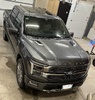
Current Vehicle: 2020 F150, XLT, Max Tow Package, Transmission Cooler, 3.5L V6 Twin Turbo, 36 Gallon Gas Tank, 3.55 rear end, yadda yadda yadda. The only issue is the leaf spring (2/1). Even using Weight Distribution hitch and added Roadmaster Active Suspension, the truck sags in the rear. This cause porpoising at speeds of 40-49 MPH. After I hit 50 MPH, it smooths out. I can run 65 MPH ok, just sucks when an 18 Wheeler passes.
I've raised the hitch set up to help lift the front of the trailer, but still have a bit of a nose dive on the trailer.
Would a better leaf spring (3/1) or (4/1) prevent this sag and cut out the porpoising?
I've raised the hitch set up to help lift the front of the trailer, but still have a bit of a nose dive on the trailer.
Would a better leaf spring (3/1) or (4/1) prevent this sag and cut out the porpoising?
You really need to post better info if you want useful answers. It seems like lack of attention to detail is the root cause, not the trailer or weight.
