


Supercharged F150


Thread Starter
Junior Member
Joined: Dec 2013
Posts: 10
Likes: 1
 Supercharged F150
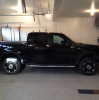
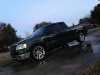
I've got a 2007 F150 just bought a rough non inter cooled supercharger looking to put the inter cooled upgrade kit on if I could find so far the truck had engine replaced last year less than 10xxx miles on new engine. New transmission just last week had the torque converter upgraded 2 a 2200 stall or 23000 have to look at the papers also had the valves and all that stuff upgraded. Been talking with Troyer performance about upgrading mike said we should be pushing just a lil over 400rwhp once we upgrade the injectors and he works his magic on the tune I was wondering if anyone else has done a similar set up and had any advice
12 Second Truck


Joined: Aug 2009
Posts: 1,931
Likes: 133
From: NC
Mikes a great guy. Your biggest challenge will be finding the intake with the intercooler. I'll keep my eyes open. Not sure what converter you got but the factory converter stalls at 2850 so if your new one stalls at 2200-2300 you have lost a little bit. Happy to answer any questions and help wherever I can.

Junior Member
Joined: Nov 2011
Posts: 96
Likes: 2
Mikes a great guy. Your biggest challenge will be finding the intake with the intercooler. I'll keep my eyes open. Not sure what converter you got but the factory converter stalls at 2850 so if your new one stalls at 2200-2300 you have lost a little bit. Happy to answer any questions and help wherever I can.


It can be hard to understand, and explain, but I will take a crack at it.
Converters are fluid couplings. With an engine and transmission side.. The converter locks the 2 together, and also allows the 2 to decouple. Everything in between is slip.
Stall is slip. What this means is your rpm's will climb up to 2850 when you perform a brake stall or a when a flash stall occurs. Your truck will still want to move at 600 rpm's, but a higher stall allows for longer slip time. Longer slip allows for more power to build on the engine side of the converter, so the transmission side and its load will have time to "catch up".. This can give you the "shot out of a cannon" feel at a launch if you hold the brake and allow for more power to build.
Flash stall is your load. So the weight of your static mass, acting much like a brake, will allow for more slip and then hook up completely at higher rpm ranges. You will still move from a dead stop, but should you mash the pedal and spin the motor and converter up quickly, it will result in a "sling shot" feel to get you moving. If you don't have slip in a converter the engine will stall..
Slip is good, but it creates heat which requires additional cooling.. Slip "stall" allows your motor to make more power with less effort (load) before it COMPLETELY couples with the tranny. The 2 are ALWAYS coupled, so power will always transmit at very low rpm's. But with a higher stall, the load of the vehicle on the tranny side of the converter, won't feel as "heavy" since the engine can spin up faster, easier, and make more power...
So if someone put a modestly higher stall converter in your truck, like a 3000 stall, and did not tell you, then you likely would not be able to even tell the difference when daily driving...
Last edited by Especial86; Apr 27, 2014 at 09:19 AM.

Senior Member
Joined: Jul 2013
Posts: 755
Likes: 38
^thats why our trucks can burnout at 2200-2500 Rpm...... But if you guys notice that when you go WOT in 2nd-3rd gear you will see the rpms hold at around 3,000 while the speedo climbs fast till the converter goes into lock up.
Junior Member
Joined: Nov 2011
Posts: 96
Likes: 2
Michael, put your foot on the brake and give it gas but don't let tires spin, what rpm does it flare to? only do this for a maximum of a few seconds tho. A 2200 stall should go right to that point. My truck is which is stock stall will barely hit 1500 and no matter how hard on brake it makes tires start to turn, which makes my stall a 1500rpm. I am not sure where this 2850 came from thats on the net, but no one even makes a stall that high in a 12" converter, they require a 11" to get to that number. the specs i came up with was 5.4 have 1300-1500 and the 4.2's have a 1500-1800 stall, 4.6's somewhere between there and diesels are around 1100rpm. So then you are also telling me that Monster transmission is going to sell a performance torque converter that is 1700-1900 stall which is a 1000rpm less than stock
Trending Topics
12 Second Truck
Joined: Aug 2009
Posts: 1,931
Likes: 133
From: NC
You cannot determine TC stall speed by using the foot brake method. It's not anywhere near accurate. Please read the follow excerpt from: http://hughesperformance.com/index.p...=1:latest-news "There are three common methods to gauge the stall speed characteristics of a torque converter. Footbrake stall is the maximum amount of engine RPM that can be achieved in a forward operating range with the brakes fully applied to prevent the vehicle from moving forward. Footbrake stall is not an accurate method of determining the true maximum stall speed of a torque converter. Furthermore, advertised stall speed ratings are not based on footbrake stall speed. Maximum static stall is the maximum amount of engine RPM that can be achieved in a forward operating range without generating any driveshaft motion. Maximum static stall can only be verified in a transbrake-equipped vehicle. Flash stall is the amount of engine RPM (or flash) that is observed upon initial acceleration under load. The easiest method for checking flash stall is to drive the vehicle at low speed in second or third range and immediately transition to wide open throttle. The RPM level that the engine immediately accelerates to is the flash stall. Flash stall speed is one of the most useful ways to truly gauge the stall speed characteristics of a torque converter and how those characteristics will influence the acceleration potential of a vehicle."
Another quick way to narrow down flash stall is at the drag strip using drag slicks. Do a burn out. Pull up to the line. Do not hold the gas and brake to rev. Simply use enough brake pressure to keep the truck from moving. When the light turns green floor it. Converter will flash to stall speed. (Rpm's will rise to tc lockup.) My Circle D converter is rated at 3000rpms. However when I launch at the strip I turn 3400rpms before locking up. This simply due to the torque being made blowing right through the lockup. Still it shows where I am stalling at regardless of stall rating.
Another quick way to narrow down flash stall is at the drag strip using drag slicks. Do a burn out. Pull up to the line. Do not hold the gas and brake to rev. Simply use enough brake pressure to keep the truck from moving. When the light turns green floor it. Converter will flash to stall speed. (Rpm's will rise to tc lockup.) My Circle D converter is rated at 3000rpms. However when I launch at the strip I turn 3400rpms before locking up. This simply due to the torque being made blowing right through the lockup. Still it shows where I am stalling at regardless of stall rating.

12 Second Truck
Joined: Aug 2009
Posts: 1,931
Likes: 133
From: NC
Some more regarding testing stall speed using the brakes taken from: http://converter.com/faqs.htm#stall2 "How can I determine the stall speed of my converter? Stall speed is very difficult to determine unless your car is equipped with a Transbrake to lock your drive train. Testing stall speed by holding the wheel brakes and running the engine against the locked brakes will usually result in wheel rotation before true stall speed is reached. The engine simply overpowers the ability of the brakes to hold the car. When rotation starts you are no longer at stall. For this reason people talk about brake stall which is not a true stall at all. An alternative method of measurement is to launch at wide open throttle and observe engine RPM reached at launch. This is flash stall."
And from: http://www.protorque.com/torque-converter-faq.html#5
What is stall speed and how do I determine what stall I have now?
Stall speed is a term used to describe the rpm at which the torque converter transfers the power from the engine to the transmission. There are different ways to test stall speed. "Foot brake stall" is when you press the brake pedal and then press the gas pedal. When the engine rpm doesn't go any higher or the tires start to spin that is "brake stall". (DO NOT TRY THIS! THIS MEASUREMENT IS MEANINGLESS AND POTENTIALLY DANGEROUS TO YOU, THE TRANSMISSION AND THE TORQUE CONVERTER!) "Flash stall" is when you, from a dead stop, press the gas pedal to wide open throttle (wot). Watch your tach needle, you will see the needle jump to a certain rpm, that is "flash stall". A drag racing-style trans brake will give you closer to the true stall speed of a torque converter.
And from: http://www.protorque.com/torque-converter-faq.html#5
What is stall speed and how do I determine what stall I have now?
Stall speed is a term used to describe the rpm at which the torque converter transfers the power from the engine to the transmission. There are different ways to test stall speed. "Foot brake stall" is when you press the brake pedal and then press the gas pedal. When the engine rpm doesn't go any higher or the tires start to spin that is "brake stall". (DO NOT TRY THIS! THIS MEASUREMENT IS MEANINGLESS AND POTENTIALLY DANGEROUS TO YOU, THE TRANSMISSION AND THE TORQUE CONVERTER!) "Flash stall" is when you, from a dead stop, press the gas pedal to wide open throttle (wot). Watch your tach needle, you will see the needle jump to a certain rpm, that is "flash stall". A drag racing-style trans brake will give you closer to the true stall speed of a torque converter.
Last edited by Blown Ford; Apr 27, 2014 at 01:06 PM.
Junior Member
Joined: Nov 2011
Posts: 96
Likes: 2
Ok I read all that. but please show me where I can buy one, I have only seen 11" ones that high of stall and why does monster and numerous other companies sell stall with such low stall than. I would put money on it that michaels truck when nailed from a stop sign with his low 2200 rpm stall probably goes over 2k instead of 1500rpm. I am sure its just how companies advertise it. they are sell it it using flash stall numbers.