


Upgrading Gears

Thread Starter
Southern Pride
Joined: Dec 2011
Posts: 646
Likes: 48
From: Georgia

The math is relatively simple. The percentage difference in tire revs/mile will be the percentage difference in effective axle ratio. 295/70R18 vs. 275/65R18 tire size 601 vs. 648 tire revolutions per mile The only 295/70R18 tire I can find is a Nitto, and Nitto doesn't include revs/mile in their specs. But they are 34.6" diameter, so grabbing another so-called 35" tire with 34.6" diameter and the revs/mile = 601. 648 minus 601 = 47, divided by 648 = 0.725 = 7.25% 3.55 ratio + 7.25% = 3.80.74 = 3.81. So you need 3.81 ratio to get back to the same effective axle ratio you had before the tire change. Since nobody makes a 3.81 ratio, then 3.83 is your closest choice. However, that's the math answer. In the real world, the taller, wider tire will have more aerodynamic and mechanical drag that the stock tires, so you need a bit more than 3.73 to get back the "feel" of power and torque of the original size tires. But the next ratio available is 4.10. So you must compromise between 3.73 and 4.10 ring gear and pinion. If you were happy with the 3.55 ratio when towing with the stock size tires, then you'll probably be happy with the 3.73 ratio when towing with the bigger tires. 3.73 will be better for unloaded cruising, and 4.10 will be better for towing (and acceleration). Your choice.
Senior Member
Joined: Feb 2010
Posts: 9,300
Likes: 1,524
From: Manassas Va
It's all about mechanical advantage. It's like a 10 speed bike, there are big cogs and small cogs, you shift the chain from small to bigger depending on what you want power wise.
Ring and pinion gears are the same with a tooth ratio.
Senior Member


Joined: Sep 2013
Posts: 354
Likes: 57
A lower gear ration (4.10 for example) will be better for towing and you'll likely get better city mileage because it's easier to get that big truck moving from a start. A higher gear ratio (3.55 for example) will yield better highway mileage.

Grumpy Old Man
Joined: Nov 2011
Posts: 3,129
Likes: 886
From: Midland County Texas, just west of the star in my avatar
The speedo (and trip meter) error is the same percentage difference as the change in effective axle ratio. IOW, your trip meter (and speedometer) will be 7.25% slow compared to a stock truck. So you have to increase the miles per the trip meter by 7.25% to correct for the inaccurate trip meter. So if your trip meter says 300 miles, then you've really gone 300 plus 7.25% or 321.75 miles on that tankfull. If you used 20 gallons of gas, then your actual MPG would be 16.08 MPG instead of the 15 MGP reported by your truck's computer. Or if you hand calculate and divide 300 miles by 20 gallons, you'll still get 15 MPG instead of the actual 16+ MPG.
When your speedo says 70 MPH, Officer Bob's radar will tell him you're doing a hair over 75 MPH. If the ticket limit is 5 MPH over the speed limit, you've just earned yourself another ticket.

Rear axle ratio doesn't affect the speedo and trip meter accuracy. Revs/mile is all that affects those. So spending the big bucks to replace the ring gear and pinion to fix the axle ratio will not fix the speedo error. The dealer, or a speed shop, or DIY using an aftermarket engine tuner/programmer is required to change the tire revs/mile parameter in the computer.

5 Year Member
Joined: Apr 2012
Posts: 31
Likes: 5
From: Houston
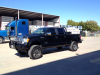
I've been running 35s for almost two years with 3.55s (towing 6500# many times) and the performance was okay. I've been searching for someone that has upgraded to 4.10s but haven't found anyone so I'm gonna be the guinea pig. Getting new gears in the next couple of weeks. 2011platinum 4x4 ecoboost btw
Thread Starter
Southern Pride
Joined: Dec 2011
Posts: 646
Likes: 48
From: Georgia
Your MPG calculations are probably off in the weeds unless you have had the speedometer "calibrated" to match the revs/mile of the bigger tires. The speedo (and trip meter) error is the same percentage difference as the change in effective axle ratio. IOW, your trip meter (and speedometer) will be 7.25% slow compared to a stock truck. So you have to increase the miles per the trip meter by 7.25% to correct for the inaccurate trip meter. So if your trip meter says 300 miles, then you've really gone 300 plus 7.25% or 321.75 miles on that tankfull. If you used 20 gallons of gas, then your actual MPG would be 16.08 MPG instead of the 15 MGP reported by your truck's computer. Or if you hand calculate and divide 300 miles by 20 gallons, you'll still get 15 MPG instead of the actual 16+ MPG. When your speedo says 70 MPH, Officer Bob's radar will tell him you're doing a hair over 75 MPH. If the ticket limit is 5 MPH over the speed limit, you've just earned yourself another ticket. Rear axle ratio doesn't affect the speedo and trip meter accuracy. Revs/mile is all that affects those. So spending the big bucks to replace the ring gear and pinion to fix the axle ratio will not fix the speedo error. The dealer, or a speed shop, or DIY using an aftermarket engine tuner/programmer is required to change the tire revs/mile parameter in the computer.
Rear axle ratio doesn't affect the speedo and trip meter accuracy. Revs/mile is all that affects those. So spending the big bucks to replace the ring gear and pinion to fix the axle ratio will not fix the speedo error. The dealer, or a speed shop, or DIY using an aftermarket engine tuner/programmer is required to change the tire revs/mile parameter in the computer.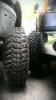
Member
Joined: Jul 2013
Posts: 88
Likes: 4
From: Kansas City MO
I know it's a different animal but in my 92 I went to a 37" tire and went from 3.55s to 4.56s in the rear end and it took me right back to the same rpm at 70 that I had with the stock set up. I have 35s on my 10 now and I'm considering a 4.56 swap since we have a double overdrive I'm not too worried about the motor turning too hard at hwy speeds. And I'd be willing to bet the mpgs go up with a lower gear.
Junior Member
Joined: Oct 2013
Posts: 22
Likes: 1
From: Dallas, Texas
I've been running 35s for almost two years with 3.55s (towing 6500# many times) and the performance was okay. I've been searching for someone that has upgraded to 4.10s but haven't found anyone so I'm gonna be the guinea pig. Getting new gears in the next couple of weeks. 2011platinum 4x4 ecoboost btw