When you click on links to various merchants on this site and make a purchase, this can result in this site earning a commission. Affiliate programs and affiliations include, but are not limited to, the eBay Partner Network.
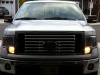
Hey guys. Giving the truck a face lift and ordered a set of fender flares that include the “raptor-style” amber led on the front fenders. I’ve been reading about what the best way to wire these would be and below is the best I came up with, ao any help is appreciated.
1. I want the LED’s on whenever the parking lights are on
2. To wire I could buy an add-a-circuit kit and use it to “tap” into the corresponding fuse for the parking lights
3. After that it would be positive to positive and negative to ground
Am I missing aomething here? It is my understanding that given what I want the lights to do, and using the add-a-circuit I do NOT need to add a relay? Is this correct.
Personally, I would still use a relay for any additions. Even low-power lights.
agreed... its just good practice.
Plus, i would not just grab power from the fuse or you will have them on all the time (or at least anytime the ignition is on). You still need to have the parking lights act as a signal, which would be done through the relay.
I would get a SPDT relay as wire like this:
30 and 85: connect to chassis ground
86: input signal from parking lights (positive)
87: connect to ground of new lighting
Wire the positive of the new lighting directly to the battery (or add-a-fuse). I would also add an additional, lower amperage fuse in that line to protect and isolate your OEM lighting from the aftermarket (unless the add-a-fuse already includes is own dedicated for the new lights... some do, some don't)
Thanks for the feedback guys, will read up more on proper wiring. As far as “tapping-in” to the parking light to serve as a signal, does this require cutting into the factory harness using a quick-splice? I thought tapping the factory harness was poor form, unless there is a diference between using it as a signal vs power source.
again excuse my ignorance here guys.
Last edited by 2011BLK_SCREW; Apr 10, 2019 at 01:04 PM.
I just did a similar setup on my ‘13. I wired the fronts directly into the parking lights and the rears into the license lamps. Every connection soldered and heat shrink wrapped. All on when parking lights are on and no problems from the install.
Thanks for the feedback guys, will read up more on proper wiring. As far as “tapping-in” to the parking light to serve as a signal, does this require cutting into the factory harness using a quick-splice? I thought tapping the factory harness was poor form, unless there is a diference between using it as a signal vs power source.
again excuse my ignorance here guys.
when you "tap in", there are several ways of doing this. I personally will not use a "t-tap" or similar. I like to use solder and heat shrink.
By using a relay you are not adding extra current on the original circuit, since it is only used to trigger the relay which allows the main current draw to follow a direct path from battery to devise and back. This is not poor for at all...in fact, it is the best way to do it. Even though your "new" lights are LED and draw very little current, i would still recommend adding them through a relay. I like to keep circuits isolated from each other when possible.
I would use a wire at the existing light socket as my signal. If you try to use a wire at the existing switch, it won't aways work. Modern vehicles use a can bus system so the control side may or may not actually signal a relay.




 LED wiring help