


Adding an Aux Battery to the EcoBoost


Senior Member
Joined: Jul 2011
Posts: 1,771
Likes: 204
From: Ontario, Canada

Yes, the truck just keeps the trailer voltage up there to maintain battery charge. It's not really designed to quickly recharge a deeply discharged battery.
Me, guess I'd go with a generator/charger to charge them up or use solar to keep them charged rather than muck with my new truck's electrics. It's so sophisticated these days, with those Hall Effect sensors and so on.
Good luck.
Me, guess I'd go with a generator/charger to charge them up or use solar to keep them charged rather than muck with my new truck's electrics. It's so sophisticated these days, with those Hall Effect sensors and so on.
Good luck.


Member
Joined: May 2013
Posts: 88
Likes: 7
From: Fredericksburg Virginia
http://www.victorinox.com/us/product...rer-Plus/53792
This member did a second battery and and gave a nice write up
This member did a second battery and and gave a nice write up

5 Year Member


Joined: Feb 2010
Posts: 957
Likes: 189
From: AZ
http://www.victorinox.com/us/product...rer-Plus/53792
This member did a second battery and and gave a nice write up
This member did a second battery and and gave a nice write up
Member
Joined: May 2013
Posts: 88
Likes: 7
From: Fredericksburg Virginia
Sorry wrong link I'm getting the knife
https://www.f150forum.com/f6/extra-b...e-sort-153101/
Try this
https://www.f150forum.com/f6/extra-b...e-sort-153101/
Try this

Junior Member
Joined: Jan 2014
Posts: 3
Likes: 0
I, like xaoc25, would like to know where and how you guys are mounting a second battery. I have an Ecoboost and there really is not much room in the engine bay. Is there some good way of moving the air filter or something else to make room?
Has anyone done frame rail mounts like the Torklift or tried to mod the auxiliary battery box on the van line to work?
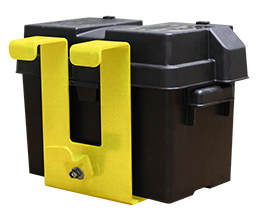

Has anyone done frame rail mounts like the Torklift or tried to mod the auxiliary battery box on the van line to work?

Junior Member
Joined: Jun 2016
Posts: 1
Likes: 0
The Battery Management System (BMS for short) doesn't shut the charging system down when alternator puts out high current - wouldn't that kind of defeat the purpose of the 220A machine in there. BMS operates of the hall sensor coming off the battery negative post. You'll see a round item around battery negative wiring before it is grounded and split off to other parts of the truck. The main purpose is to measure the current coming into and out of the battery.
Why would you want to measure battery current - mainly to monitor the battery state of charge. If your battery begins to have a low SOC, then the system, can raise the system voltage and load shed consumerable items to reduce draw (such as heated/cooled seats). It will also shut off the battery saver in Key in Accessory mode.
BMS also uses a hall sensor coming off the alternator. With both sensors it helps to balance the charging system, improves fuel economy and mainly protects the battery from ever dying or getting too low (extends battery life).
With that said, you could do away with the sensors and upgrade the wiring as normal. Unplugging the sensors will trip a DTC but not an error light on the dash - "Check Charging System" would be the error message. If you wanted to keep the BMS operating correctly, you'll need to pass all the upgraded wiring thru these sensors and I know they are not big enough for a 1/0 cable plus the OEM wiring. You could remove the OEM wiring and pass a single 1/0 cable thru it. Once thru the sensor, can splice off as needed - this is what I would perform.
So to answer your questions with that in mind:
1 - No it won't shut the system down. If the aux battery is wired directly to the OEM battery (not thru the sensor) then nothing happens but the system will not be able to protect the battery from a low SOC. If the aux battery is wired thru the sensor, then system actually will help to promote charging of the second battery. One of the first things it may do is increase idle speed to help pump more alternator current if it is in full field already.
2. - No and yes. You can do the big 3 upgrade but still keep the battery and alternator current sensors if possible. When you disconnect the alt/battery wiring, the wire end connectors was designed so they could be slipped thru the current sensor w/o being cut. Then route your new wiring as needed.
However, do not run the alternator output directly to the solenoid. It shoud be run to the OEM battery first, then all connections made from there. Depending on the system, you may be bypassing the pre-fuse box connected to battery B+ terminal which protects the alternator wiring.
I would connect your solenoid from the OEM battery.
3. If all wiring from the alternator and battery pass thru the hall sensors, then the system will be able to monitor the charging system performance. If you realize it is there to protect the battery and not to shut down the charging system you'll be better off in the long run and possibly be not stranded out in the boonies.
Note - Worse case though, if you left the OEM wiring in place and connected additional wiring from the alt to the solenoid (make sure it is protected/fused) would throw off the system. If you don't utilize your aux battery that much then the balance of the system won't be off very much and likely not know the difference. However, used every weekend and the system will not know how to react and might cause some undesirable results.
I quickly typed this and didn't have time to proof it so hopefully it made some sense and don't be afraid to ask questions. There are guys who put sound systems with a second battery and following above advice have had no adverse affect. The BMS system isn't like what Honda does and drop the system voltage so low that the sound system performs lousy, but will actually raise it when needed.
Why would you want to measure battery current - mainly to monitor the battery state of charge. If your battery begins to have a low SOC, then the system, can raise the system voltage and load shed consumerable items to reduce draw (such as heated/cooled seats). It will also shut off the battery saver in Key in Accessory mode.
BMS also uses a hall sensor coming off the alternator. With both sensors it helps to balance the charging system, improves fuel economy and mainly protects the battery from ever dying or getting too low (extends battery life).
With that said, you could do away with the sensors and upgrade the wiring as normal. Unplugging the sensors will trip a DTC but not an error light on the dash - "Check Charging System" would be the error message. If you wanted to keep the BMS operating correctly, you'll need to pass all the upgraded wiring thru these sensors and I know they are not big enough for a 1/0 cable plus the OEM wiring. You could remove the OEM wiring and pass a single 1/0 cable thru it. Once thru the sensor, can splice off as needed - this is what I would perform.
So to answer your questions with that in mind:
1 - No it won't shut the system down. If the aux battery is wired directly to the OEM battery (not thru the sensor) then nothing happens but the system will not be able to protect the battery from a low SOC. If the aux battery is wired thru the sensor, then system actually will help to promote charging of the second battery. One of the first things it may do is increase idle speed to help pump more alternator current if it is in full field already.
2. - No and yes. You can do the big 3 upgrade but still keep the battery and alternator current sensors if possible. When you disconnect the alt/battery wiring, the wire end connectors was designed so they could be slipped thru the current sensor w/o being cut. Then route your new wiring as needed.
However, do not run the alternator output directly to the solenoid. It shoud be run to the OEM battery first, then all connections made from there. Depending on the system, you may be bypassing the pre-fuse box connected to battery B+ terminal which protects the alternator wiring.
I would connect your solenoid from the OEM battery.
3. If all wiring from the alternator and battery pass thru the hall sensors, then the system will be able to monitor the charging system performance. If you realize it is there to protect the battery and not to shut down the charging system you'll be better off in the long run and possibly be not stranded out in the boonies.
Note - Worse case though, if you left the OEM wiring in place and connected additional wiring from the alt to the solenoid (make sure it is protected/fused) would throw off the system. If you don't utilize your aux battery that much then the balance of the system won't be off very much and likely not know the difference. However, used every weekend and the system will not know how to react and might cause some undesirable results.
I quickly typed this and didn't have time to proof it so hopefully it made some sense and don't be afraid to ask questions. There are guys who put sound systems with a second battery and following above advice have had no adverse affect. The BMS system isn't like what Honda does and drop the system voltage so low that the sound system performs lousy, but will actually raise it when needed.