


Tinted clear buffing?

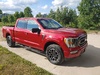


 Tinted clear buffing?
Thought I'd ask you guys in here, since you are the pros!
First off I'm a paint tech in the auto body industry. Have been in the industry for 17 years and painting 14.
So i have lots of experience color sanding and buffing. Both fresh paint and factory.
Ford has a few tinted clear paints. Such as RR ruby red, and Z9 candy blue. When we sand the clear on these at my work for blends and such, the RR clear has red dust, and the Z9 blue.
What are you guys doing on these? I haven't had much experience buffing the OEM tinted clears. Are you taking color away enough to cause issues?
First off I'm a paint tech in the auto body industry. Have been in the industry for 17 years and painting 14.
So i have lots of experience color sanding and buffing. Both fresh paint and factory.
Ford has a few tinted clear paints. Such as RR ruby red, and Z9 candy blue. When we sand the clear on these at my work for blends and such, the RR clear has red dust, and the Z9 blue.
What are you guys doing on these? I haven't had much experience buffing the OEM tinted clears. Are you taking color away enough to cause issues?
Senior Member
Joined: Oct 2013
Posts: 250
Likes: 32
Sir, by your post I'm pretty sure you take the experience cake and could probably school all of us! 
With that stated, and as a hobbyist, I just treat it like everything else. The only wet sanding I've done on these F150s have been unremarkable as far as differences go.
I'll usually try to borrow a paint gauge and do the door sill trick to use as a guide but past that....no special procedure and no issues for the 3x small times I've done it.
For regular correction, I'm a huge fan of Maguiars Ultimate compound and some of the Menzerna line if I'm trying to stay in the single step lane but will go to the M105/205 one two punch if it really needs its. The follow on LSP wax or sealant is whatever I feel like.
Been playing with Blackfire for fun as of late and enjoy the line. While I really see about 4 months with Crystal Seal, I'll gladly do it 3 times a year for wipe on walk away performance. Ask me in a few months and I'll probably be on to something else....this darn hobby...
With that stated, and as a hobbyist, I just treat it like everything else. The only wet sanding I've done on these F150s have been unremarkable as far as differences go.
I'll usually try to borrow a paint gauge and do the door sill trick to use as a guide but past that....no special procedure and no issues for the 3x small times I've done it.
For regular correction, I'm a huge fan of Maguiars Ultimate compound and some of the Menzerna line if I'm trying to stay in the single step lane but will go to the M105/205 one two punch if it really needs its. The follow on LSP wax or sealant is whatever I feel like.
Been playing with Blackfire for fun as of late and enjoy the line. While I really see about 4 months with Crystal Seal, I'll gladly do it 3 times a year for wipe on walk away performance. Ask me in a few months and I'll probably be on to something else....this darn hobby...
Last edited by nickstradamus; Nov 24, 2013 at 02:25 PM.

Paint Polishing Guru
Joined: Feb 2013
Posts: 385
Likes: 43
From: Utah
I've not had to treat tinted clears differently. yes I get a bit of color from the tint onto my pads but that is expected. I've had to sand a few, and they are NOT very thick. I use a paint thickness guage to help me know what I'm dealing with. I guess if you strike through you personally have access to re shoot, the rest of us don't.
Cheers,
GREG
Cheers,
GREG
I've not had to treat tinted clears differently. yes I get a bit of color from the tint onto my pads but that is expected. I've had to sand a few, and they are NOT very thick. I use a paint thickness guage to help me know what I'm dealing with. I guess if you strike through you personally have access to re shoot, the rest of us don't.
Cheers,
GREG
Cheers,
GREG

Edit: sorry, actually that was acrylic enamel, not laquer. And that era f150 had that on it for sure.
Last edited by 21RRF150; Nov 26, 2013 at 05:39 PM.
I've not had to treat tinted clears differently. yes I get a bit of color from the tint onto my pads but that is expected. I've had to sand a few, and they are NOT very thick. I use a paint thickness guage to help me know what I'm dealing with. I guess if you strike through you personally have access to re shoot, the rest of us don't.
Cheers,
GREG
Cheers,
GREG
Basically my question is, say you get a reading of 5 mils. How are you able to tell how much of that is clear? So you don't burn through.
Trending Topics
Senior Member
Joined: Oct 2013
Posts: 250
Likes: 32
[QUOTE="mbullock;3132842"] Here's another question for you. Paint thickness gauge. You said you use one when buffing. I thought they are all cumulative? As in, e coat, base coat, clear coat. Or whatever combo is there. Are the newer nicer ones able to differentiate between clear thickness, and base thickness? Basically my question is, say you get a reading of 5 mils. How are you able to tell how much of that is clear? So you don't burn through.[/QUOTE
Nickstradamus writes:
Can't speak for the pro, but there are high end gauges that can tell how much clear is there and separate by layer. If you are using a normal thickness gauge (still $500+) there is an art to it. One trick I was taught to use as a data point is the door jam. This area is considered to be covered with the least amount of clear to protect....core exterior panels have more (not much, but more). So by taking a reading on the panel you need to work and the jam you can get a loose idea of where you might be. And that is only one of many data points to consider.....it really is an art to inspect, correct , and protect with just the right combination. But now we are in professional waters and that is where I turn around.....quickly.
Nickstradamus writes:
Can't speak for the pro, but there are high end gauges that can tell how much clear is there and separate by layer. If you are using a normal thickness gauge (still $500+) there is an art to it. One trick I was taught to use as a data point is the door jam. This area is considered to be covered with the least amount of clear to protect....core exterior panels have more (not much, but more). So by taking a reading on the panel you need to work and the jam you can get a loose idea of where you might be. And that is only one of many data points to consider.....it really is an art to inspect, correct , and protect with just the right combination. But now we are in professional waters and that is where I turn around.....quickly.
Paint Polishing Guru
Joined: Feb 2013
Posts: 385
Likes: 43
From: Utah
yes there are PTG that measure individual layers, they cost about 2000$
If you have a PTG that measures total film build then you have to be creative and a cautious. Finding a place on the car where they dont clear coat will help you greatly, take a measurement of CC paint and then subtract that from the measurement of the NON CC area. This will give you a ballpark idea.
there are other tricks, but I can't teach you all of them…..
cheers,
GREG
If you have a PTG that measures total film build then you have to be creative and a cautious. Finding a place on the car where they dont clear coat will help you greatly, take a measurement of CC paint and then subtract that from the measurement of the NON CC area. This will give you a ballpark idea.
there are other tricks, but I can't teach you all of them…..
cheers,
GREG