When you click on links to various merchants on this site and make a purchase, this can result in this site earning a commission. Affiliate programs and affiliations include, but are not limited to, the eBay Partner Network.
Why I Installed a Louder Horn on My 2018 White F150
After far too many close calls with drivers "not seeing" my truck (a weekly occurrence), I decided I needed a louder horn for safety—and maybe a little satisfaction when they sh** their pants.
The Setup
I went with a HornBlasters 4-chime, 3-liter kit. The compressor fits perfectly behind the rear seat on the driver's side, making installation straightforward without drilling into the cab or floor.
I HAVE ZERO AFFILIATION WITH HORNBLASTERS - THIS POST IS ONLY TO HELP OTHERS WHO MAY BE CONSIDERING A LOUDER HORN
Steps I Followed:
Access Behind the Rear Seat
I installed a rear seat release on the driver's side to access the unused space.
The compressor fits snugly in that area with enough room for wiring and a solid ground connection.
Routing Wires and Air Hose
I ran the wiring and air hose through the channels under the removable floorboard panels (unsure of the official name).
To get everything through the firewall, I used a gun-cleaning rod to push the wiring and hose through the rubber grommet where the main harness goes. A second pair of hands helps here.
Mounting the Horns
I needed to mount the horns facing forward or upward to avoid damage from strong underbody carwash jets.
The best spot was behind the radiator. I used the aluminum panel at the bottom of the radiator, which already has existing holes.
I attached the horns using an aluminum L-bracket. After drilling holes and bending the bracket slightly for the perfect angle, the mount was rock-solid.
Why This Setup Works
Cost-Effective: The non-weather-resistant horn kits are much cheaper than external mounts where the compressor is weather-resistant. And even then, usually, the manufacturer will say to place it somewhere that is protected from the elements.
Perfect Fit: The space behind the rear seat feels made for a smaller 3-gallon compressor. A slightly larger compressor may work as well, but be sure to measure the space.
Practical Installation: No drilling into the truck cab, and the wiring is cleanly hidden. Not having to drill through my cab made this install easier and less stressful.
If you're considering installing an air horn kit, I hope these tips help! This setup has made my weekly close calls a little safer—and a lot louder.
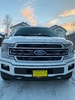
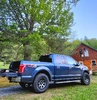
rear seat release for the driver's side 3-liter air compressor to power the horns wires and air tubing routed along the channel under the floor board panels firewall into the engine bay firewall from inside the cab underside of the aluminum L-bracket about 6 inches from the back of the radiator All mounted up
I have been wanting to get a train horn for the same reasons as you. Nice writeup!
Is the compressor just sitting there or is it bolted to something?
How long can you blast the horn before the tank runs out of air?
How do you activate the horn?
I have been wanting to get a train horn for the same reasons as you. Nice writeup!
Is the compressor just sitting there or is it bolted to something?
How long can you blast the horn before the tank runs out of air?
How do you activate the horn?
At first I just had the compressor sitting there and it was fine and never moved. But it was a little loud when it vibrated against the seat when it turned on. So I put some of that super strong velcro on the bottom of the mounting bracket and it helps to reduce the vibration noise and secures it well. The velcro simply grabs onto the black carpet-like material behind the seat.
The horn will blast for about 5 seconds before you hear it start to run out of air and get quieter. A larger compressor would extend that time.
I hooked mine up directly to my main horn so now its just loud whenever I use my horn as normal, but there is an option to use a toggle so you can deactivate it as needed. Or you can use a separate push button for the horn activation.
At first I just had the compressor sitting there and it was fine and never moved. But it was a little loud when it vibrated against the seat when it turned on. So I put some of that super strong velcro on the bottom of the mounting bracket and it helps to reduce the vibration noise and secures it well. The velcro simply grabs onto the black carpet-like material behind the seat.
The horn will blast for about 5 seconds before you hear it start to run out of air and get quieter. A larger compressor would extend that time.
I hooked mine up directly to my main horn so now its just loud whenever I use my horn as normal, but there is an option to use a toggle so you can deactivate it as needed. Or you can use a separate push button for the horn activation.
I think I would do a frame-rail tank mount to get a larger tank. 5 seconds is probably ok but if you really need to blast someone it would be aggravating to run out of air. And for sure I would separate the stock horn button and only use the train horn on demand. I think also depending on how loud it is you might have legality issues with it so best not to be your only horn.
Did you mention if you hooked this directly to the battery with an inline fuse or not?
I think I would do a frame-rail tank mount to get a larger tank. 5 seconds is probably ok but if you really need to blast someone it would be aggravating to run out of air. And for sure I would separate the stock horn button and only use the train horn on demand. I think also depending on how loud it is you might have legality issues with it so best not to be your only horn.
Did you mention if you hooked this directly to the battery with an inline fuse or not?
All good points. You could probably find a larger compressor to fit that same area but not much larger - just depends on the shape.
Definitely check your local revised code. Mine has no restrictions other than it can't be a siren that sounds like first responders.
I hooked the horn itself to a power supply in the fuse box under the hood. The compressor has a fusible link straight to the battery.
All good points. You could probably find a larger compressor to fit that same area but not much larger - just depends on the shape.
Definitely check your local revised code. Mine has no restrictions other than it can't be a siren that sounds like first responders.
I hooked the horn itself to a power supply in the fuse box under the hood. The compressor has a fusible link straight to the battery.
Just the tank needs to be larger. Compressor is probably fine. I installed a full time compressor in my buddy's Jeep (as an engine-driven accessory) so he'd always have full time air for off-roading. We used a re-purposed a/c compressor. I'd love to do that but there isn't enough room in the F-150 to install one I think.


 Train Horn Installation