When you click on links to various merchants on this site and make a purchase, this can result in this site earning a commission. Affiliate programs and affiliations include, but are not limited to, the eBay Partner Network.
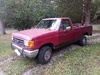
I've got a 5.0L 1987 F-150 which is not starting due to no-spark. I've gone through the steps to diagnose the PIP, ICM etc and all looks good except for the IGN Ground (black wire bottom pin of ICM) which has 4.4V on it rather than being at ground - this means the coil is not being pulled to ground and so not producing a spark.
Suspecting the ECM I've pulled it from the truck and opened it up, it looks quite new and does not have any obviously leaking capacitors. I suspect it's been replaced in the past.
Is it possible to bench test these units easily? Any tips for testing the wiring to/from the ECM to rule out a short in the wiring somewhere?
I want to be 100% sure the ECM is bad as I'm in the UK so shipping replacement parts from the US is expensive!
I don't have experience testing the Ignition Control Module, or the ECM, other than replacing the blue capacitors on the ECM circuit board, but have you checked the main ground cable from the battery negative terminal to the engine block and frame?
It can cause hard to troubleshoot issues.
The power grounds for the ECM, come out of the engine harness at the passenger's side top of the radiator, and need to be connected to the battery negative terminal. The other end of those grounds are pins 40 and 60 at the ECM.
There's also a ground connection at the driver's side hood hinge.
Thanks that’s helpful - checked and both pin 40 and 60 have low resistance ground connections, so that is good news.
More confusingly, I’m seeing odd measurements elsewhere:
1. With no battery connected, the resistance between battery positive cable and battery negative cable is 130kohm, not a low reading but I expected no connection at all
2. With no EEC relay installed, the resistance between ground (black) and ignition (? white/blue) is only 30 ohms with the key out of the ignition, again I’d expect no connection until the key was turned.
Both tests are with the ECM module removed completely so it’s not something internal to the computer causing these readings. Am I barking up the wrong tree or onto something?
I'd sure see if your public library over there has AllData where you can pull up a schematic for your 1987
You have a short somewhere in the wiring I believe
I only have a 88, 89 and 90 EVTM in print
AllData has them all
Over here it's free at our libraries
Thanks that’s helpful - checked and both pin 40 and 60 have low resistance ground connections, so that is good news.
More confusingly, I’m seeing odd measurements elsewhere:
1. With no battery connected, the resistance between battery positive cable and battery negative cable is 130kohm, not a low reading but I expected no connection at all
2. With no EEC relay installed, the resistance between ground (black) and ignition (? white/blue) is only 30 ohms with the key out of the ignition, again I’d expect no connection until the key was turned.
Both tests are with the ECM module removed completely so it’s not something internal to the computer causing these readings. Am I barking up the wrong tree or onto something?
From Haynes, the shielding, SPOUT, PIP and ground wiring.
Have you tried wiggling different parts of the harness around while your volt meter is connected, to see if the voltage changes?
I'm pretty sure that shielding issue is near the driver's side inner fender.
Thanks that’s helpful - checked and both pin 40 and 60 have low resistance ground connections, so that is good news.
More confusingly, I’m seeing odd measurements elsewhere:
1. With no battery connected, the resistance between battery positive cable and battery negative cable is 130kohm, not a low reading but I expected no connection at all
2. With no EEC relay installed, the resistance between ground (black) and ignition (? white/blue) is only 30 ohms with the key out of the ignition, again I’d expect no connection until the key was turned.
Both tests are with the ECM module removed completely so it’s not something internal to the computer causing these readings. Am I barking up the wrong tree or onto something?
Also, it's worth it to investigate the column mounted ignition switch.
You'll have to lower the steering column to get to it. If your truck is an automatic, disconnect the shift indicator cable before lowering the column.
The ground at the ECM relay coil is connected to the O2 sensor also. Investigate the O2 sensor harness. It comes around the back of the passenger's side of the engine, runs to a connector behind the battery, then follows the starter cable down to the exhaust Y pipe.
Another common connection to the ECM relay white and light blue wire is the noise suppression capacitor near the ignition coil. Investigate/disconnect that as well.
Last edited by Soup Bean; May 2, 2025 at 03:05 PM.
Sorry I missed these replies - some good avenues for investigation which I’ll have a look at this week.
Went out today and pulled fuses to see if I could identify a short - when I disconnected the positive terminal that runs to the alternator the resistance increases to infinity - I need to do some googling to see if that’s a problem or expected.
Left the alternator disconnected and plugged the computer back in and the resistance drops from infinite to the mega ohms range, truck still does not run.
This is making me think it’s more likely the computer, but I’m going to take a look at the suggestions around the SPOUT shielding and ignition switch first before ordering a replacement.
I thought that the SPOUT wasn’t the issue as unplugging it doesn’t change anything, but I suppose if there is a short it might not matter.
Quick thread update - I gave in a ordered a new computer which arrived over the weekend and....nothing.
Same symptoms still no spark.
My top suspect is still this white/blue wire - it has 30ohms resistance to ground and so has 30ohms resistance to the bottom black ground pin of the ICM. That black ground has ~4V on it.
Time to go back to studying the wiring diagram to see how I can isolate section of the wiring to locate the fault.
To update the thread with the conclusion and to hopefully help future Googlers, the solution was a new Ignition Control Module.
In the end I think measuring the resistance of circuits like I did is a fools errand - it just doesn't give you good information. What I did that convinced me it was the ICM was:
1. Remove the distributor and bench test the PIP output using a 12V power supply - this allowed me to turn the distributor rotor slowly and clearly see the 10V -> 0V -> 10V cycle
2. Reinstall the distributor and use a cheap oscilloscope to see the PIP output whilst everything was connected - I got a fairly clean square wave (I didn't trust the scopes actual numbers, I just looked at the shape)
3. Use the oscilloscope to measure the coil output from the ICM - it was a square wave (which is what previously led me to rule out the ICM) but much noisier, the "fall" of the wave wasn't as clear and sharp
4. Briefly ground the ignition coil on the side which connected to the ICM coil output whilst a spark tester was connected - got a spark (this convinced me it was the ICM)
I think the ICM was working still but just not well enough, it's output to the coil wasn't clean enough to trigger the coil to spark.
Thanks for the help everyone - now I need to re-loom take everything and replace the ICM connected as basically fell apart in my hands when I first removed it!


 `ECM wiring test - how to verify