When you click on links to various merchants on this site and make a purchase, this can result in this site earning a commission. Affiliate programs and affiliations include, but are not limited to, the eBay Partner Network.
(i6 300) BAD Screech in Neutral, With No Accessories Attached
Hello!
I just bought a 1989 Ford F-150 XLT with a straight six. (I think that's the 4.9L/300?)
" class="post_inline_image" data-size="252x252" data-src="https://cimg8.ibsrv.net/gimg/www.f150forum.com-vbulletin/252x252/truck_d42c5eee16e0992e9ead20574a49def60a22479d.png" loading="lazy" />
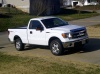
my truck
It started making this horrendous screeching noise last week. It is making that noise with the accessory/serpentine belt removed, the transmission in neutral, and the clutch pushed all the way in. I need help identifying what the noise is, and determining if it's worth fixing. This is everything we've done so far to try to locate the source:
My dad and I took off the intake and valve cover, thinking it might be a valvetrain issue. To our eyes they looked to be functioning properly? You can see them working in this video. We followed the rocker arm torqueing process anyways, and it didn't help. The engine did have plenty of oil when that video was taken, and I don't see any oil being sprayed on/in the valvetrain. Could potentially be an issue?
We drained the oil, it looked pretty alright. Maybe a metal shaving or two, but certainly no glitter.
We tried taking off the oil pan, thinking maybe we'd be able to identify a bent rod/spun bearing or something that could be making that noise. We got the oil pan unbolted but with the suspension the way it is, I don't think you can get it completely out without some major work: unbolting and lifting the engine, dropping the transmission, or maybe some serious suspension removal. At any rate, we couldn't see anything immediately problematic through the little gap we have.
We tried isolating the sound with a metal tube, but its so loud its hard to hear anything.
At this point I'm kinda at a loss. The only potential issue I'm seeing is a lack of oil in the valve cover. I'm not sure how to know if that's a problem or the source of the noise. I'm also not sure how to fix that, but if I knew that was the issue I'm sure I could figure it out.
You say the noise is present with the clutch pedal pushed all the way in, sounds like a bad throw out bearing with the clutch to me.
This sounds like a great idea. We pulled the spark plug wires and cranked the engine over at the starter solenoid to see if the clutch pedal position would change the noise.
Agreed with raski about the throwout bearing suggestion, but your last video wasn't the frequency or varying noise level I have experienced with a throw-out bearing problem when the clutch is exercised.
Here, recalling squalls loudly when clutch disengaged / pedal in, near silence when clutch engaged / pedal out at a frequency that the motor is turning over.
Going off into deep opinion land, would think a motor / transmission mount issue would also squeak must faster than being heard.
Your concern about valve train oiling may be worth investigation. Would expect with all the cranking done, maybe not a spray, would definitely expect some kind of even oozing up top. Whether that relates to blocked passages or an oil pump not getting it done, dunno.
Since it is not constant and sounds like it is hitting something every revolution (reality 600> rpm) I would say someone did a clutch job wrong and probably used the bolts to pull together a stuck transmission. I would start by seeing if any ears are broken or bolts missing. If I had to hazard a guess, they did not install the pilot bearing and the squeaking are the fingers of the pressure plate. See if they installed the stone shield between the engine and transmission. You should be able to get a borescope in there at least from the starter hole and take a look around at the bottom of scrap metal or bits.
Unlike a pressure plate, it is almost impossible to break a flywheel on a normal truck, but, it would not hurt to make sure the ring gear is attached and that the starter is properly retracting (bendix ?).
I had kinda discounted engine oil pressure being an issue, but before we went pulling the transmission out, we bought a gauge and tested the oil pressure at the oil pressure sending unit port on the block.
Anybody have any experience with diagnosing a blockage or replacing an oil pump on one of these? I kinda worry it might just be junk anyways, we’ve run it a fair bit since it started squeaking.
No experience in this area but recommend finding a shop manual hopefully having diagrams of the oil passages and how-to's for the oil pump and the expected connection between the camshaft drive gear and the expected dizzy / oil pump connection.
My approach would be to verify the oil pump first, then move onto possible blockages elsewhere.
Unsure about Ford motors, but on my Jeep 304, could pull the dizzy and put a drill with a screwdriver bit into the mating slot to drive the oil pump without cranking the motor - used for priming the new pump after a replacement to avoid a dry start.
Was the truck running when you got it? If not, a quick check might be to pop the dizzy cap to ensure the rotor is rotating when turning over - if the rotor doesn't turn, then chances are better than average that the oil pump isn't being turned either.
I suppose you could remove the dist. and make sure the rod is connected. Though if it sticks and you drop the shaft into the oil pan, you might be a tad angry with yourself. I can not remember doing that with a SBF, though I can admit I have done it at least once with a FE I bought a tool (shaft) to prime my 351w before starting it, it was only a few bucks. Maybe you could try priming your engine and see if you get oil out of the gauge hole before trying the new cheap option which is replacing the oil pump. From experience I suggest putting in the shaft before putting the pan back on ....
Problem is I have never heard an I-6 make that noise, I have heard them tick, maybe knock, maybe rattle, I have not heard that repetitive wearing noise (did not sound screeching to me). I bought my oil pump shaft from Summit Racing, basically a 5/16 (?) rod with clips so it does not fall into the engine.
shows the entire process. We should’ve taken it as gospel. I don’t have anything valuable to add on that front.
The oil pump ended up being fine, I didn’t take any pictures, but aside from some surface scratches (likely from sucked-up bearing bits) it looked pristine.
The culprit was an entirely clogged pick-up tube screen. This is AFTER a fair bit of scrubbing and brake-cleaning:
I have no idea what this substance is. It felt kinda paper-y? Maybe some congealed engine cleaning substance? or something?
Whatever it is, we got it all cleaned up and reinstalled it on the truck:
(we really should’ve bought a new one, but at this point we didn’t know if it was even gonna run again)
If you’re curious, we did get a video of the valvetrain cranking after validating we had oil pressure. There wasn’t nearly as much oil flow up there as I was expecting. Just a trickle, as some of you had said it should be.
We currently have it filled up with 10w40. It’s anybody’s guess how long it’ll run for now. My fingers are crossed
Thanks for all the help everyone!
PS-
we had some fun with an oil pump bypass
it flowed enough to stop it squeaking while it was cranking, but according to my research, it wasn’t nearly enough to keep it fed under load. the pump was only rated for 1.5 GPM(?) and it looked like a comparable engine typically requires 4-5 even at 2k rpm.
I have no idea what is on the cloth since it looks literally like sand and dirt OR wood chips, hard to tell.
> I have no idea what this substance is.
The stuff on the screen looks like the gel stuff under the engine oil fill cap that you get when a vehicle is not driven enough to heat up the oil and burn the water off. When I used to do oil changes at the stealership, I would wipe it off the cap sometimes. Though it may be wood fiber that broke down in the oil. Not beyond the realm of possibilities that a mouse made a nest in the valve cover when the cap was not put back on.


 (i6 300) BAD Screech in Neutral, With No Accessories Attached
 " class="post_inline_image" data-size="252x252" data-src="https://cimg8.ibsrv.net/gimg/www.f150forum.com-vbulletin/252x252/truck_d42c5eee16e0992e9ead20574a49def60a22479d.png" loading="lazy" />




 I bought a tool (shaft) to prime my 351w before starting it, it was only a few bucks. Maybe you could try priming your engine and see if you get oil out of the gauge hole before trying the new cheap option which is replacing the oil pump. From experience I suggest putting in the shaft before putting the pan back on ....


