When you click on links to various merchants on this site and make a purchase, this can result in this site earning a commission. Affiliate programs and affiliations include, but are not limited to, the eBay Partner Network.
Hi there! First post here, looks like a great place for info. I did some searching but was not able to find the exact answer to my question. I would like to know whether the power wires on the 7 pin connector are rated for 10amp or 5amp current. I am looking to run a DC/DC converter in a camp trailer to charge an AGM battery while driving. Thank you all in advance and I look forward to learning here!
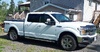
A pic of my truck (and trailer in tow) a few months ago somewhere in the forests of steamboat co!
In my manual fuse #30 is labeled as AC clutch relay and the pass compartment fuse panel #30 is “not used”
You'll have to check your models manual. Mine was for a '19 there are several fuses feeding the trailer, brakes, battery charge, parking lamps, stop lamps.
My life seems like a circus act of jumping through hoops! I think my truck may be in a window of poor production where they didn't wire up the charge pin with the proper wiring size...if I am not mistaken, the wiring to the 7pin is 18#...
My life seems like a circus act of jumping through hoops! I think my truck may be in a window of poor production where they didn't wire up the charge pin with the proper wiring size...if I am not mistaken, the wiring to the 7pin is 18#...
Your likely correct on it being 18 ga. Around your house 18ga is only good for 7 amps, but automotive plays by different rules. I would not be nervous going up to a max of 10 amps. Just an FYI seems late model Fords don't power that terminal unless the trailer control module "sees" a trailer attached.
If you are looking to use more than what the 7Pin can deliver, run a 10Ga from the battery back and have a separate connection for the convertor. It will protect the truck, and allow for 12v power without needing to have the truck running. The 7 pin only supplies power when running and the door is closed.
The DC/DC converter will want as much voltage as possible in order to work at full power. The more power you can put into the DC/DC converter, the more it can use to charge the battery.
What DC/DC converter are you planning to use?
An 18 ga wire will only carry 4.85 amps if the run is say 20 feet. 'You will only have 12.52 volts at the end of the run. A loss of 1.28 volts. That might not sound like much of a drop, but believe me it is for things like lights, and DC/DC converters.
Determine the total feet of wire needed for your project, determine what percentage of voltage drop you are willing to put up with, calculate the maximum current you expect the device at the end of the run to draw, then go to this site to calculate what size wire you need. https://www.wirebarn.com/Wire-Calculator-_ep_41.html
Once you have determined the wire size you need, you need to select what size fuse or breaker is needed. A common misconception when choosing a fuse: Most people think the fuse is designed to protect the device at the end of the run. It is NOT!. The fuse is designed to protect the WIRE between the battery and the device. The device should have it's own internal fuse. For 18 ga wire a 5 amp fuse would be used. 10 ga wire would use a 30 Amp fuse.
The best solution is to run a 10 ga wire from the battery through an ATC fuse holder with a 30 Amp fuse or use a 30 Amp Circuit Breaker located as close to the battery as possible. Run it to a dedicated connector at the rear of the truck. Then have a mating connector from the trailer. You could also have a relay triggered by a key on circuit if you did not want the circuit hot all the time.
I have done this to every tow vehicle I have ever owned so that I can power the 12V fridge and charge the trailer batteries while towing. Usually I would use the 7 pin trailer connector to do this, but Ford seems to have engineered the ability to do this out of the newer trucks.
So I will be running a dedicated 10ga wire in the near future with a dedicated connector.
The DC/DC converter will want as much voltage as possible in order to work at full power. The more power you can put into the DC/DC converter, the more it can use to charge the battery.
What DC/DC converter are you planning to use?
An 18 ga wire will only carry 4.85 amps if the run is say 20 feet. 'You will only have 12.52 volts at the end of the run. A loss of 1.28 volts. That might not sound like much of a drop, but believe me it is for things like lights, and DC/DC converters.
Determine the total feet of wire needed for your project, determine what percentage of voltage drop you are willing to put up with, calculate the maximum current you expect the device at the end of the run to draw, then go to this site to calculate what size wire you need. https://www.wirebarn.com/Wire-Calculator-_ep_41.html
Once you have determined the wire size you need, you need to select what size fuse or breaker is needed. A common misconception when choosing a fuse: Most people think the fuse is designed to protect the device at the end of the run. It is NOT!. The fuse is designed to protect the WIRE between the battery and the device. The device should have it's own internal fuse. For 18 ga wire a 5 amp fuse would be used. 10 ga wire would use a 30 Amp fuse.
The best solution is to run a 10 ga wire from the battery through an ATC fuse holder with a 30 Amp fuse or use a 30 Amp Circuit Breaker located as close to the battery as possible. Run it to a dedicated connector at the rear of the truck. Then have a mating connector from the trailer. You could also have a relay triggered by a key on circuit if you did not want the circuit hot all the time.
I have done this to every tow vehicle I have ever owned so that I can power the 12V fridge and charge the trailer batteries while towing. Usually I would use the 7 pin trailer connector to do this, but Ford seems to have engineered the ability to do this out of the newer trucks.
So I will be running a dedicated 10ga wire in the near future with a dedicated connector.
What are you using to terminate the 10G in the bed? I have it run in mine, but never finished the termination. On my previous truck I used a socket for it, but wanted something a bit more robust.


 2016 3.5 EB trailer wiring question