


Starter issues, help please


Thread Starter
Junior Member
Joined: Jun 2011
Posts: 7
Likes: 3
 Starter issues, help please
Hello,
I have a 2000 F150, 4.6L V8 with 88k miles. I've replaced my starter and starter cable. On the old ones, the positive ring terminal on the starter cable had corroded off and the ground post on the solenoid was snapped off (don't ask. lol) I'm pretty certain I have all of the correct connections and that they're tight. When I turn the key over, I get a rapid-fire clicking noise starting at 10seconds in the video in the below link.
Can someone help point me in the right direction? I been told both to shim it and that it shouldn't need shimmed. I've been told to move the flex plate slightly in case it wasn't aligned properly. I have a good battery with clean terminals. I've tried jumping it with another vehicle and also a 12v Power Pack. I'm at a loss. Any help would be greatly appreciated.
http://s161.photobucket.com/user/boo...487ea.mp4.html
I have a 2000 F150, 4.6L V8 with 88k miles. I've replaced my starter and starter cable. On the old ones, the positive ring terminal on the starter cable had corroded off and the ground post on the solenoid was snapped off (don't ask. lol) I'm pretty certain I have all of the correct connections and that they're tight. When I turn the key over, I get a rapid-fire clicking noise starting at 10seconds in the video in the below link.
Can someone help point me in the right direction? I been told both to shim it and that it shouldn't need shimmed. I've been told to move the flex plate slightly in case it wasn't aligned properly. I have a good battery with clean terminals. I've tried jumping it with another vehicle and also a 12v Power Pack. I'm at a loss. Any help would be greatly appreciated.
http://s161.photobucket.com/user/boo...487ea.mp4.html
Thread Starter
Junior Member
Joined: Jun 2011
Posts: 7
Likes: 3
Well, I've gone through and checked all of my connections. I actually found that the ground in the middle of the starter cable (that bolts to the frame, not to the firewall under the hood), that hole was stripped. I drilled and tapped it and have it secured tightly and STILL get the exact same noise. I checked the ground on the solenoid (all 3 connections down there, actually), and all seem tight and good.
I've replaced the starter relay, the starter cable, the starter, and the battery.
I'm at a loss, folks.
I've replaced the starter relay, the starter cable, the starter, and the battery.
I'm at a loss, folks.

Driving the wheels offer


Joined: Sep 2011
Posts: 1,054
Likes: 187
From: Maine USA
how much trouble to remove the starter and bench test the bendix spring - or use jumper cables to connect directly from the battery to the starter + to +, - to starter housing - that's a pretty quick test - maybe the shim idea has some credibility if the pinion can't engage on the flywheel - something not lining up right

From the video, you are def getting some voltage at the starter. I just don't think you have good connections. Even if a volt meter shows 12.2 volts doesnt mean you have proper connections to carry 100+ (well over) amps to the starter.
Honestly, I would do the big 3 and be done with it. Your starter solenoid is obviously hitting, so don't worry about that. I would double check battery post for good connection, then proceed to the starter itself(and the solenoid).
Here are some pics for reference, I upgraded all mine to 1 gauage welding cable.
Engine block to ground. (I kept the factory engine block ground) but decided to use the starter/block ground instead. Considering your starter takes more amps than any other device on the truck, I thought this is the best place to do the engine ground since it connects to both the starter ground and block ground.
Here is the bolt we will need to loosen for the connection. Note: their are two nuts on this bolt! The back one holds the gasket secure so make sure and not let this come loose(Keep a wrench on it at all times when loosening).

Honestly, I would do the big 3 and be done with it. Your starter solenoid is obviously hitting, so don't worry about that. I would double check battery post for good connection, then proceed to the starter itself(and the solenoid).
Here are some pics for reference, I upgraded all mine to 1 gauage welding cable.
Engine block to ground. (I kept the factory engine block ground) but decided to use the starter/block ground instead. Considering your starter takes more amps than any other device on the truck, I thought this is the best place to do the engine ground since it connects to both the starter ground and block ground.
Here is the bolt we will need to loosen for the connection. Note: their are two nuts on this bolt! The back one holds the gasket secure so make sure and not let this come loose(Keep a wrench on it at all times when loosening).
Once you have the top nut off, make sure the back bolt is secure.
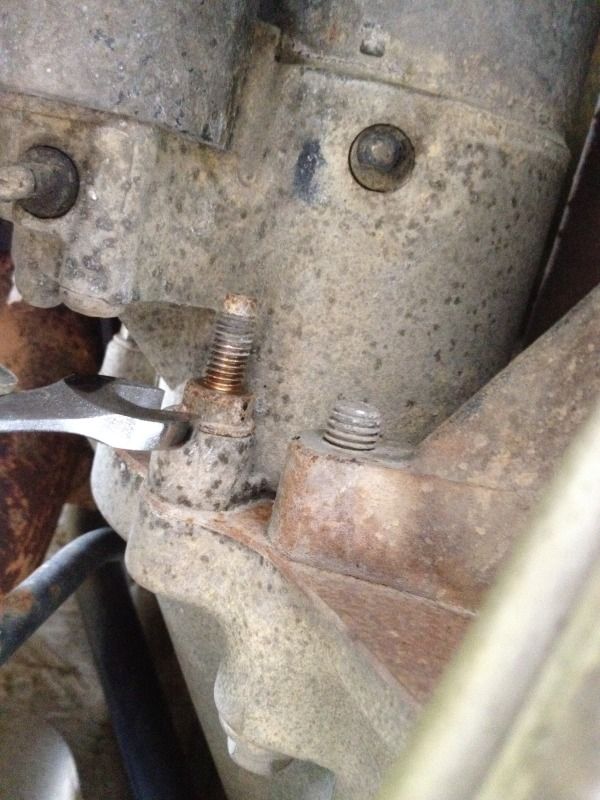

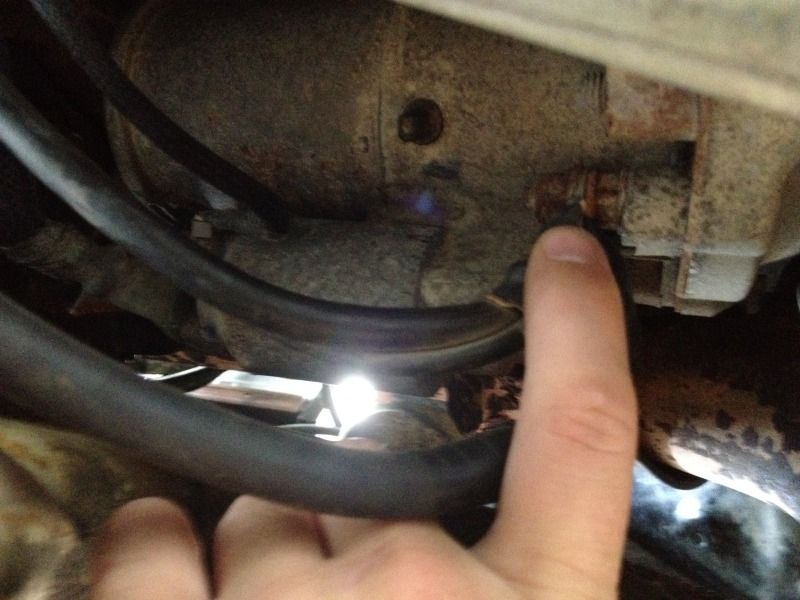
Then again I kept the existing wiring and doubled them up. This wire runs from the starter/block ground to your main ground (the one is step two) or you can choose to run it directly to the - (neg) battery terminal. Both work relatively the same, only the latter of the two takes up more wire.
If you want more starting power
Considering how harsh our winters are here, I wanted to gain as much starter power as I could, so I decided to upgrade the + starter wire as well. This will make sure as much current as possible goes into cranking. Below are steps.
If you look on the opposite side of the starter (as the ground) you will see a lil red cap covering two bolts on your starter solenoid. The larger one on the left with the heavy ga wire is the one we are interested in. Its covered with a nylon coating (not where my socket is)
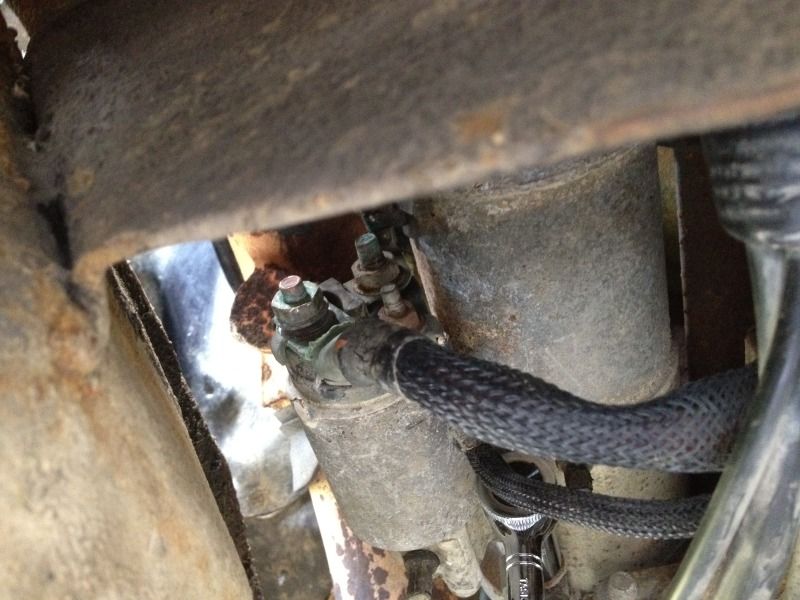
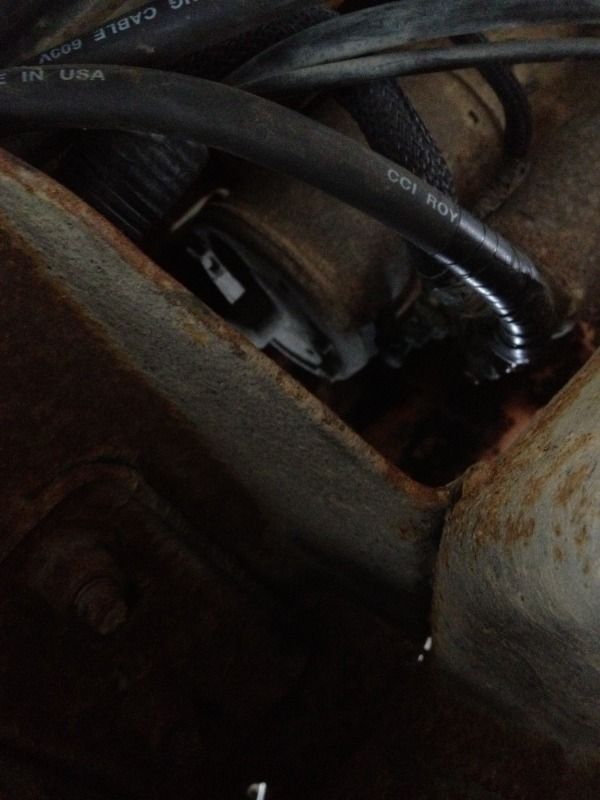
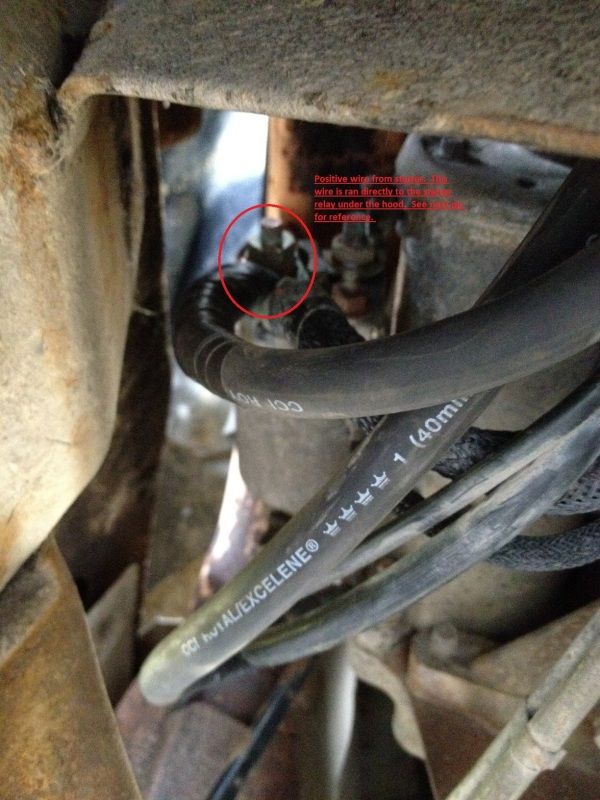
Once you have located the bolt run your heavy gauge wire from that bolt to the starter relay bottom bolt (on your firewall). You should already have two terminals added here, this will make the third. Current is always flowing from this location so be careful when doing this an not hit your wrench on the top bolt(ignition lead). Once you have the terminal connected to the bottom bolt, securely tightly and enjoy your work. This will dramatically increase the amperage going to your system and your starter for long lasting power.
Then install your fuse (the one that runs from the battery to the relay) and re-attach all your battery terminals to the post.
Then again I kept the existing wiring and doubled them up. This wire runs from the starter/block ground to your main ground (the one is step two) or you can choose to run it directly to the - (neg) battery terminal. Both work relatively the same, only the latter of the two takes up more wire.
If you want more starting power
Considering how harsh our winters are here, I wanted to gain as much starter power as I could, so I decided to upgrade the + starter wire as well. This will make sure as much current as possible goes into cranking. Below are steps.
If you look on the opposite side of the starter (as the ground) you will see a lil red cap covering two bolts on your starter solenoid. The larger one on the left with the heavy ga wire is the one we are interested in. Its covered with a nylon coating (not where my socket is)
Once you have located the bolt run your heavy gauge wire from that bolt to the starter relay bottom bolt (on your firewall). You should already have two terminals added here, this will make the third. Current is always flowing from this location so be careful when doing this an not hit your wrench on the top bolt(ignition lead). Once you have the terminal connected to the bottom bolt, securely tightly and enjoy your work. This will dramatically increase the amperage going to your system and your starter for long lasting power.
Then install your fuse (the one that runs from the battery to the relay) and re-attach all your battery terminals to the post.
Trending Topics

Too Loud? Too Bad!
Joined: Dec 2012
Posts: 558
Likes: 29
From: Central NJ
Thread Starter
Junior Member
Joined: Jun 2011
Posts: 7
Likes: 3
ibd2328
Your first line about the volt meter showing 12 volts has a very good chance of being the notion that gets this thing fixed. I have a new battery, and it always tested at 12.4-12.8 volts, so I thought (in my limited experience) no way the battery is the issue.
I had a friend come over and do some additional testing. We found that I'm dropping to 3.8 volts when I turn the key over. I have the battery on a charger as we speak. Hopefully the answer will be as simple as a (sorta) dead battery as a few others have mentioned.
Lesson learned! The next time someone tells me the solution is simple, I won't disregard it. lol
Thanks to all who contributed! I've learned a ton from this experience.
Your first line about the volt meter showing 12 volts has a very good chance of being the notion that gets this thing fixed. I have a new battery, and it always tested at 12.4-12.8 volts, so I thought (in my limited experience) no way the battery is the issue.
I had a friend come over and do some additional testing. We found that I'm dropping to 3.8 volts when I turn the key over. I have the battery on a charger as we speak. Hopefully the answer will be as simple as a (sorta) dead battery as a few others have mentioned.
Lesson learned! The next time someone tells me the solution is simple, I won't disregard it. lol
Thanks to all who contributed! I've learned a ton from this experience.