When you click on links to various merchants on this site and make a purchase, this can result in this site earning a commission. Affiliate programs and affiliations include, but are not limited to, the eBay Partner Network.
What filler rod is used for tig welding a 2016 f150 aluminum unibodybody repair?
Hi there,
Been looking everywhere on what filler rod is used on the aluminum unibody sectioning repairs utilizing tig with 100% argon?
I’ve watched numerous videos on this however no one mentions the filler rod they use. Specifically blue collar Kyle does this repair a lot and does an awesome job and is what I’m following.
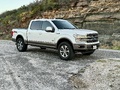
I am fixing the rear right cab corner on my 2016 XLT supercrew f-150 project for winter.
Not sure if I can just use 4043 or 5356 or if it needs to be something else for filler rod? Pretty sure it’s 6000 series aluminum on the f150’s but not sure if it requires a specific filler rod?
Also with welding on this truck I of course risk electrical damage. I’m going to disconnect the battery of course but is there anything else I should disconnect that you guys recommend?
Thank you in advance, I made an account here specifically to try and talk to you all.
My electrode chart doesn't cover aluminum...so it's of no help.
However, I just had $21k in hail damage repairs to my truck. The body shop would not even approach the idea of welding on the body and State Farm agreed. It seems these bodies are extremely modular, so a direct replacement part that rivets on (depending on the area) may be a more suitable repair option.
According to Ford, they use 6061-T6. For butt welds either 4043 or 5356 is acceptable, as the parent metal will be weaker in the heat affected zone and will break before the weld will. For fillet welds, the additional strength of 5356 would make it the better choice.
4043 is easier for less skilled welders to work with and will give a nicer look.
I would strongly recommend that you disconnect every single thing that has a computer or control circuit in it. The high frequency generators used in TIG welding machines run continuously during AC welding, and will fry most solid state components. Because of this, several motorcycle manufacturers will no longer warranty any electrical failures whatsoever if they find any evidence of "non-factory" welding on their products.
According to Ford, they use 6061-T6. For butt welds either 4043 or 5356 is acceptable, as the parent metal will be weaker in the heat affected zone and will break before the weld will. For fillet welds, the additional strength of 5356 would make it the better choice.
4043 is easier for less skilled welders to work with and will give a nicer look.
I would strongly recommend that you disconnect every single thing that has a computer or control circuit in it. The high frequency generators used in TIG welding machines run continuously during AC welding, and will fry most solid state components. Because of this, several motorcycle manufacturers will no longer warranty any electrical failures whatsoever if they find any evidence of "non-factory" welding on their products.
So don't weld it is what you're really suggesting. Everything has a computer or circuit board in it, even something as simple as the headlight switch.
I can be welded - not by someone of my ability!! I had a tear in the bed. Insurance wanted to replace the side. Repair guys said they could fix it and it would still retain the stock look - the repair has to be rivited on and you can tell the work had been done because of the way factory vs. aftermarket repair has to be done.
Granted it wasn't a huge repair but you cannot even tell it was there:


 What filler rod is used for tig welding a 2016 f150 aluminum unibodybody repair?